Regulatory Reform for Private Sector Growth in Cameroon: Lessons from Rwanda and Mauritius
October 26, 2026
Introduction
Cameroon has a young population whose entrepreneurial potential could play a key role in job creation, innovation, and economic growth. However, for many young people, entrepreneurship remains primarily a means of subsistence, not a path to a sustainable business. Limited access to financing, complicated administrative procedures, inadequate infrastructure, and a lack of practical skills hinder the growth of small businesses.
The African Continental Free Trade Area (AfCFTA) offers Cameroonian entrepreneurs the opportunity to access a larger market. But this opening alone will not be enough, as businesses must comply with standards, understand trade rules, and offer products at competitive prices (OMD, 2022).
This policy brief first analyzes the challenges faced by young Cameroonian entrepreneurs. It then examines the opportunities offered by the AfCFTA and the conditions necessary to enable local businesses to take full advantage of this continental market. Finally, it proposes concrete reforms to strengthen the competitiveness of young businesses, facilitate their access to markets, and promote sustainable and inclusive growth.
1. The Paradox of Entrepreneurship in Cameroon: Lots of Activity, but Little Growth
Entrepreneurship plays a major role in Cameroon’s economy. Faced with unemployment, a shortage of salaried jobs, and difficulties entering the workforce, many young people start small businesses or offer services to make ends meet. These initiatives demonstrate a capacity to adapt and a desire for self-reliance. The potential of Africa’s youth also represents an opportunity for the development of the digital economy (World Economic Forum, 2023).
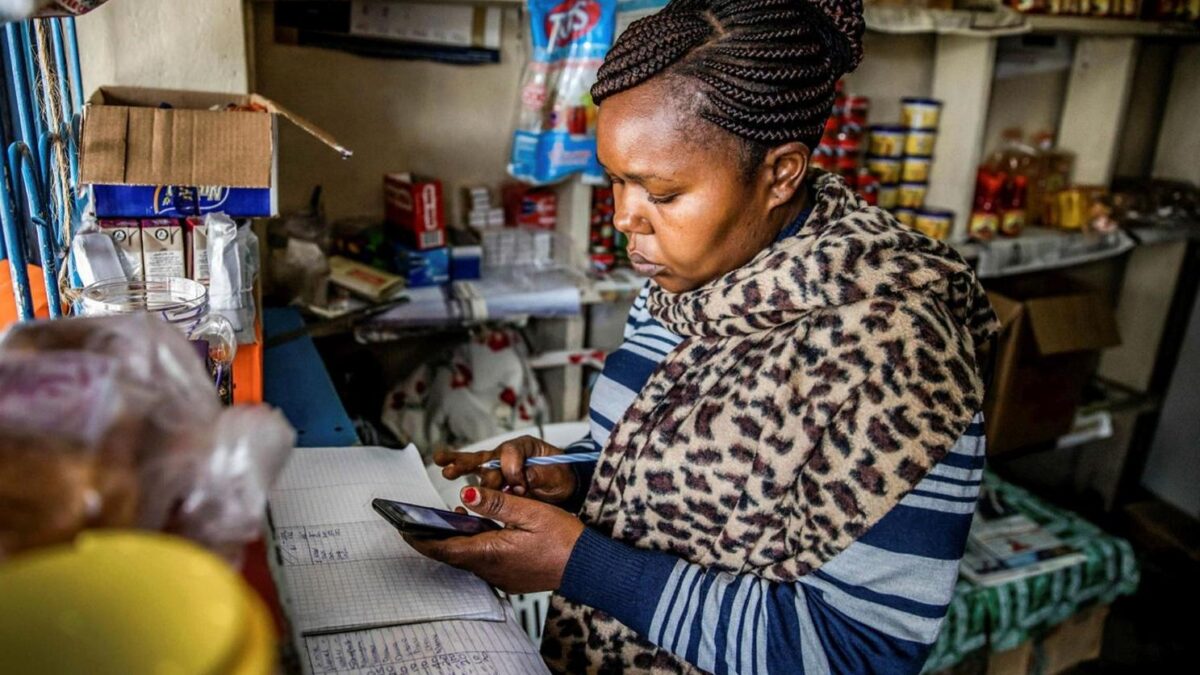
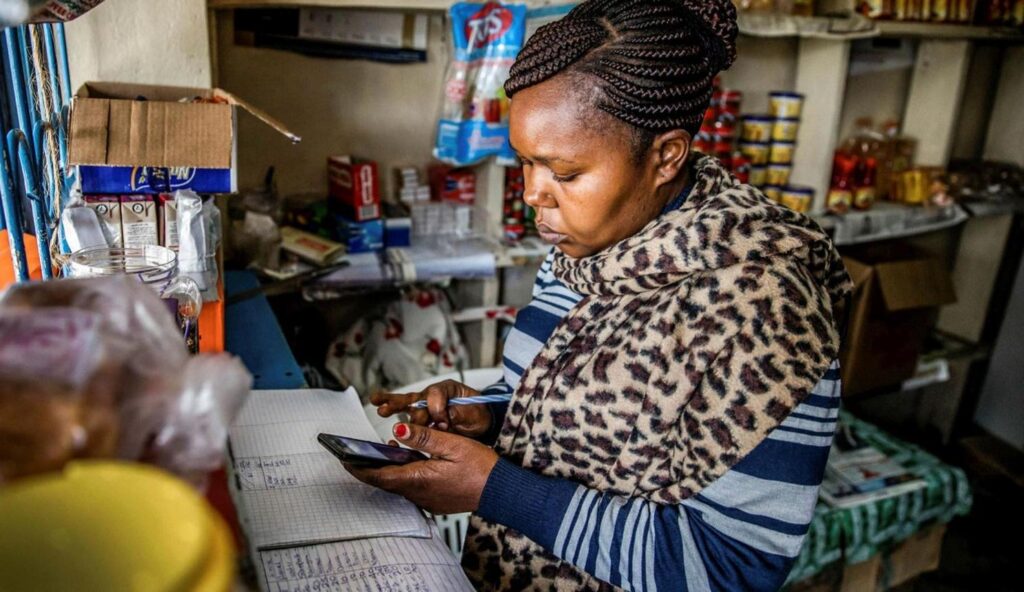
However, starting a business does not necessarily mean building a sustainable enterprise. Many young entrepreneurs operate with limited resources, sell primarily in their neighborhoods, and lack the means to invest, hire employees, or expand their customer base. Some businesses remain in survival mode for several years.
The informal sector illustrates this challenge. The prevalence of informal employment poses a challenge to access to social protection. Informality is not always a deliberate attempt to circumvent the rules. For some entrepreneurs, it can also be a response to procedures deemed costly, complex, or ill-suited to their needs. When a business does not clearly see the benefits of formalization, it is reluctant to commit.
The challenge, therefore, is to make business creation and development more accessible. Public policies should not measure their success solely by the number of registered businesses. They should also assess these businesses’ ability to survive, increase sales, create jobs, and access new markets.
2. Why Do Young Businesses Struggle to Grow?
2.1. Limited Access to Financing
Financing remains a major obstacle for small businesses. A young entrepreneur may have a good idea and find customers, but lack the resources to purchase equipment, build inventory, or hire staff. Financial difficulties and risk management are significant challenges for the resilience of Cameroonian SMEs (Djamo et al., 2026).
Banks often require collateral that young people do not possess. Those who have neither real estate nor a sufficient banking history struggle to obtain a loan. Informal financing can be a solution, but it does not always provide the funds needed to invest.
This creates a vicious cycle: the business cannot invest because it lacks financing, and it cannot obtain financing because it remains small and has few assets to offer as collateral.
2.2. Overly Complicated Administrative Procedures
Formalization makes it easier for businesses to access certain markets, financial services, and partnerships. In Cameroon, public programs for business creation serve as a starting point for entrepreneurs who wish to formalize their operations.
However, the procedures, costs, and obligations associated with registration can be a burden for small businesses. The goal is not to abandon the rules necessary for consumer protection or transparency. Rather, it is to ensure that procedures are tailored to the size and capabilities of businesses.
2.3. Infrastructure That Drives Up Costs
Infrastructure plays a key role in the performance of SMEs and their ability to compete. These challenges particularly affect entrepreneurs outside major economic centers. They limit their access to suppliers, new customers, and participation in national or regional value chains.
2.4. A Lack of Practical Skills
A business may offer a good product but fail to sell it if it cannot identify its customer base, organize its distribution, or tailor its offerings. Studies on youth entrepreneurship highlight the importance of better harnessing this potential to support economic growth (Mbarga W. G., Djamo H., 2026).
Entrepreneurship training should go beyond theory and help young people solve concrete problems in managing their businesses.
3. The AfCFTA: A Continental Opportunity That Requires National Preparation
The AfCFTA represents a significant opportunity for Cameroonian businesses. It aims to facilitate trade among African countries and expand market opportunities. It encompasses a continental market of more than 1.4 billion people and a combined GDP exceeding $3 trillion.
For young entrepreneurs, this opening can enable them to sell beyond the domestic market, find new partners, and increase their production. An agri-food company, for example, could seek customers in neighboring countries or participate in a regional value chain.
However, the existence of a continental market does not guarantee that small businesses will be able to benefit from it. Entrepreneurs must understand rules of origin, quality requirements, customs procedures, and certification requirements. They must also meet deadlines, control their costs, and ensure a steady supply. These requirements can be difficult to meet for a business that is already struggling to finance its operations or access reliable energy.
Cameroon must align policies supporting entrepreneurship with initiatives that facilitate trade. Young entrepreneurs need clear information on markets, standards, export procedures, and opportunities for regional integration. Initiatives to simplify trade can help reduce certain barriers for small businesses (Henri Kouam, 2026)
Recommendation
- To improve access to financing, a public guarantee mechanism could incentivize banks to lend to young entrepreneurs who have viable projects but lack collateral. Transparent criteria and rigorous monitoring would be essential to mitigate risks.
- Entrepreneurship training should focus on practical skills: cash flow management, cost calculation, accounting, and customer acquisition. It should also help young people understand the requirements of the AfCFTA, such as rules of origin, quality standards, and export procedures.
- Investments in roads, electricity, and internet access must meet the actual needs of businesses, including those in rural areas.
- Tailored measures should facilitate access to financing, training, and markets for women and rural entrepreneurs. Results must be tracked by gender, region, and sector of activity.
Conclusion
The development of youth entrepreneurship is essential for expanding economic opportunities in Cameroon. But simply creating businesses is not enough if they are fragile, fail to create jobs, and do not expand beyond the local market.
Access to financing, administrative streamlining, practical skills, and infrastructure are key conditions for enabling businesses to grow. The AfCFTA can reinforce this momentum, provided that young entrepreneurs are prepared to meet the demands of regional trade.
Cameroon should therefore evaluate its entrepreneurship policies based on concrete results: business survival, sales growth, jobs created, access to financing, and participation in regional trade.
Références
Djamo, H., Mbarga, G. S., Egbe-Njir, F., Meungwe, C. D. & Kouam, H. (2026). REPORT: State of Entrepreneurship in Cameroon (2024/2025), Cameroon Economic Policy Institute (CEPI), Henri Koua (2026). https://camepi.org/wp-content/uploads/2026/06/State-of-Entreprenurship-Report.pdf
Fondation Foretia. (s. d.-a). Navigating business risks and enhancing the resilience of SMEs in Cameroon in the face of the 2025 Finance Law. https://www.foretiafoundation.org/navigating-business-risks-and-enhancing-the-resilience-of-smes-in-cameroon-in-the-face-of-the-2025-finance-law/
Fondation Foretia. (s. d.-b). Infrastructure development: A key factor in boosting the performance and competitiveness of Cameroon’s small and medium-sized enterprises. https://www.foretiafoundation.org/infrastructure-development-a-key-factor-in-boosting-the-performance-and-competitiveness-of-a-cameroons-small-and-medium-sized-enterprises/
Fondation Foretia. (s. d.-c). Youth-led entrepreneurship: Harnessing the potential of young people to drive economic growth in Cameroon. https://www.foretiafoundation.org/youth-led-entrepreneurship-harnessing-the-potential-of-young-people-to-drive-economic-growth-in-cameroon/
Henri Kouam. (2026). A Simplified Trading Regime Will Unlock AfCFTA Trade in Central Africa – Faster. CEPI. https://camepi.org/a-simplified-trading-regime-will-unlock-afcfta-trade-in-central-africa-faster/
Mbarga W. G., Djamo H. (2026). Preparing Youth for the job market. CEPI. https://camepi.org/preparing-youth-for-the-job-market/
Ministère des Finances du Cameroun. (s. d.). Business creation space in the Republic of Cameroon. https://minfi.gov.cm/en/business-creation-space-in-the-republic-of-cameroon/
Social Protection. (s. d.). Extending social security coverage to informal workers in Cameroon. https://socialprotection.org/blogs/extending-social-security-coverage-informal-workers-cameroon
Tralac. (s. d.). African Continental Free Trade Area (AfCFTA). https://www.tralac.org/resources/by-region/cfta.html
World Economic Forum. (2023). How African youth will drive global growth and the digital economy. https://www.weforum.org/stories/2023/08/africa-youth-global-growth-digital-economy/
Author
Mbeng Martin
Free Market Fellow