The African Continental Free Trade Area’s (AfCFTA) Implementation in Cameroon, South Sudan and Zambia
January 11, 2026
Boosting the Tech Sector in Burundi and Cameroon: Opportunities, Challenges and Prospects
January 17, 2026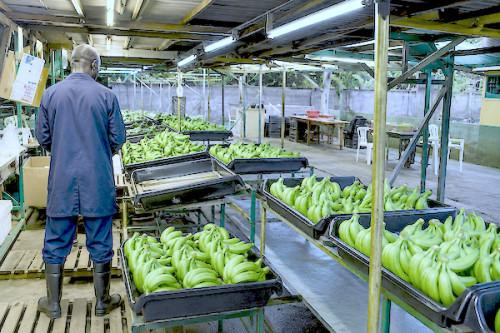
Executive Summary
Entrepreneurship lies at the core of Cameroon’s economic and social fabric. In 2024, the country counted over 444,000 registered enterprises, reflecting a dynamic entrepreneurial spirit largely driven by necessity, demographic pressure, and limited formal employment opportunities. However, this apparent dynamism conceals a deep structural duality. On one hand, a vast informal sector, employing over 90% of the working population and contributing approximately 40% of GDP, acts as a social safety net and buffer against unemployment. On the other, a small but strategic formal sector and a nascent start-up ecosystem, generates the bulk of documented jobs, tax revenues, and innovation-led growth.
The entrepreneurial landscape can be segmented into three categories:
(i) Informal micro-enterprises focused on subsistence and survival;
(ii) Formal SMEs, which represent only about 12% of businesses but contribute 36% of GDP and form the backbone of the registered economy; and
(iii) Start-ups, still limited in number but increasingly influential in high-value sectors such as FinTech, HealthTech, AgriTech, and digital services.
Formal SMEs and very small enterprisesare the primary generators of sustainable, documented employment. Between 2015 and 2022, they created nearly 70,000 formal jobs per year, with Very Small Enterprises accounting for over 55% of modern formal employment. Meanwhile, the informal sector absorbs the majority of labor, but is characterized by low productivity, limited scalability, and weak fiscal contribution.
Taxes are slowing formal-sector development: Cameroon’s overall tax-to-GDP ratio remains low, reflecting the narrowness of the tax base and the exclusion of informal activity. This places a disproportionate fiscal burden on formal firms, raising compliance costs and discouraging formalization. Furthermore, access to finance remains a binding constraint: fewer than 25% of SMEs and only about 15% of start-ups have access to formal funding, largely due to collateral requirements, archaic credit scoring models that do not consider important data from mobile money transactions, and perceived risk.
Strong potential for Agri-businesses: Agri-business and value addition offer strong potential for job creation and export diversification, particularly under the African Continental Free Trade Area (AfCFTA).
Entrepreneurship in Cameroon is constrained by structural bottlenecks. Regulatory and administrative burdens remain high, with lengthy and costly business registration, complex tax compliance, and weak contract enforcement encouraging informality. Infrastructure deficits, particularly unreliable electricity, high data costs, and inefficient logistics, inflate operating costs and reduce competitiveness. Finally, governance risks, including corruption and insecure property rights, further undermine investor confidence and access to credit, especially in fragile regions affected by security challenges.
Strategic Recommendations for Ecosystem Growth
For Policymakers:
- Simplify and digitize business registration and tax payments, and adopt a national Start-up Act to reduce regulatory friction.
- Invest in reliable energy, and transport infrastructure, particularly in secondary cities.
- Open up the communications and telecoms sector to external competition. We Urgently and Explicitly call for Starlink’s application to be approved in Cameroon in 2026.
- Support skills development through vocational training aligned with private sector needs and promote gradual formalization.
- Address the Anglophone security crisis head-on to create political and socio-economic certainty.
For Financial Institutions and the Central Bank:
- Deepen financial intermediation through credit guarantee schemes, risk-sharing instruments, but expand this to include microfinance institutions (MFIs).
- Use mobile-money data to design new and inclusive credit scoring models for the largely informal economy. Commercial banks should increasingly create transparent scoring models to support decision making that supports credit for informal production units. By using data such as payment of bills, savings, use of funds, they can build better models to support true and verifiable financial inclusion.
To cite
Djamo, H., Mbarga, G. S., Egbe-Njir, F., Meungwe, C. D. & Kouam, H. (2026). REPORT: State of Entrepreneurship in Cameroon (2024/2025), Cameroon Economic Policy Institute (CEPI), Henri Kuam Foundation, https://camepi.org/wp-content/uploads/2026/06/State-of-Entreprenurship-Report.pdf
Authors
Hawaing Djamo, National Coordinator & Senior Policy Analyst
Guy Seraphin Mbarga, Research Analyst
Dr. Egbe-Njie Fride, Research Fellow
Dr. Chefor Meungwe Daisy, Research Fellow
Henri Kouam, Founder & Executive Director