
The AfCFTA Can Boost Industralization of the Cameroon Cassava Value-Chain
June 6, 2026
A Name Change will not Improve the State-owned Electricity provider’s Prospects
June 6, 2026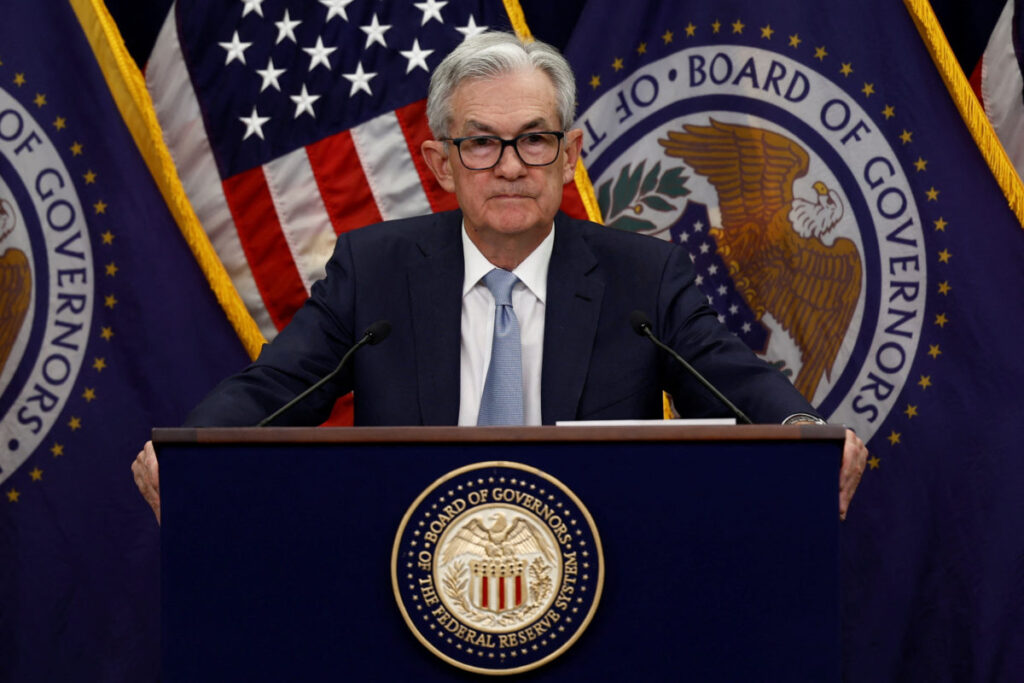
Central bank mandates don’t prevent accountability, but reinforce their ability to work independently of political pressure
In his last address, the Chairman of the Federal Reserve Board of Governors, Jerome Powell, has served for over eight years, and his term ended on May 15th 2026. While his tenure has been riddled with attacks from politicans from the right, he held his resolve and protected the Central Bank’s independence at all costs. The monetary policy stance of th United States has a direct imapct on developing countries, impacting lending costs, the value of currencies, import prices, and risk perception.
It is the right time to analyse Powell’s legacy and see what lessons developing countries can draw from his tenure. Although Powell’s job was turbulent due to his public disagreements with President Donald Trump and the Justice Department’s investigation into alleged building cost overruns (they have been dropped), he leaves behind an important legacy of both achievements and shortcomings.
His experience in dealing with inflation and promoting maximum employment and supporting financial stability, while defending the Fed’s independence, holds important lessons for African and Global Central Bankers.
How to Handle a Crisis!
During the COVID-19 pandemic, the central bank imposed sweeping measures to guarantee price stability and promote maximum employment – demonstrating an unwavering commitment to its dual mandate. Together with the Treasury, they launched a record-breaking stimulus estimated at 25% of Gross Domestic Product (GDP), pushing the FED’s balance sheet from $4 trillion in 2019 to $9 trillion in early 2022, while cutting interest rates to near-zero.
The COVID-19-triggered recession appeared to be the shortest (2 months) due to massive fiscal and monetary measures, allowing the U.S. to recover faster than any other country in the Group of Ten nations. While the U.S. unemployment rate rose from 3.7% in 2019 to 8% in 2020 following a recession, it fell to 3.6% n 2022 and currently stands at 4.3% in April 2026.
Inflation was not Transitory
However, Powell and the Fed maintained a very accommodative monetary policy even as inflation began to accelerate in 2021. The FED described inflationary pressures as transitory and was proven wrong when inflation rose and peaked at 9.1% in June 2022. The Central Bank began to raise interest rates aggressively from near-zero to 4.25 – 4.5% by the end of 2022. They also implemented quantitative tightening to shrink their massive balance sheet. It is important to note that markets were more wrong than Powell, with professional forecasters expecting inflation to reach 2.1% by 2022. The Peterson Institute for International Economics (PIIE) shows that inflation expectations were anchored around 2.1%, signalling a more dovish tone to the FED. While the FED is independent, it also gets cues from market participants.
The FED’s policy mistake came with a new monetary policy framework of flexible inflation targeting in 2020. Under this approach, the FED could allow inflation to err slightly above 2% for some time after periods of low inflation. This strategy overstates the importance of past inflation, creating a bias for accommodative monetary policy following a period of low inflation. For a developing country, this illustrates the need to temporarily experiment with its monetary policy frameworks to identify what works best for a largely informal sector.
At the time, global supply chain disruptions linked ot the fallout of the COVID-19 pandemic increased the cost of doing business. This caused the FED to abandon its new inflation targeting regime – only after inflation proved persistent. Even so, the Fed brought inflation under control and the need to balance economic growth th
Silicon Valley Bank (SVB) Shows Some Lapses in Supervision
In 2023, Silicon Valley Bank (SVB) collapsed, and the Fed responded quickly by launching an emergency liquidity facility – a Bank Term Funding Program – to prevent the crisis from spilling into other states or sectors. Naturally, there was a review of SVB’s supervision and regulation, where the FED noted that the bank’s Directors and Management failed to manage risk properly. However, he admitted that supervisors did not appreciate the extent of the Bank’s vulnerabilities that grew in size and complexity. Even though interest rate and liquidity risks were identified, supervisors did not move fast to ensure that they were addressed.
This emphasized the role of regulation and supervision in ensuring that a regional banking crisis does not become systemic. When I spoke to our resident finance expert, he told me that the FED should be able to enable front-line banking staff to perform their duties diligently, but questioned whether the central banks should have supervisory power and the ability to set monetary policy all at one.
Powell Stands up to Political Pressure #Strong
While successfully navigating a series of global crises, Powell stood firm against executive overreach and political interference in the FED’s affairs. He gained public support by refusing to budge on President Trump’s tirade on lower interest rates, with broad support from us all and many more Americans that I can count. His predecessor will be forced to abide by the consensus decision-making mantra of the Fed, but Jerome Powell was a class act and a textbook case on how to manage executive pressure and the central bank’s mandate.
In Central Africa, where the Bank of Central African States (BEAC) sets monetary policy for the six countries – Cameroon, Chad, Congo. Rep, Central African Republic, Chad, Equatorial Guinea, Gabon. African central banks whose mandates preclude political interference must stand up to strong men who seek to influence monetary policy. Anyone who remembers Turkey and Erdogan’s interference in monetary policy knows that politicians only invite runaway inflation when they try to influence it.
Powell will stay on until the end of his term in January 2008, and so will still play an important role in shaping monetary policy debates and the Federal Reserve’s decision-making. One thing is clear: central banks are independent institutions and should design monetary policy based on economic and financial data rather than political pressure.
In brief
Central Bank independence should not be mistaken for a lack of accountability. Most central bankers testify in front of their congresses or elected officials periodically. That allows them to be held to account, but we must not allow the politicisation. of central banking. If politicians can barely run well-functioning economies, we should worry if they seek to control more of the economy – and for good reason. The government’s role in the economy should be limited – with high cheque books, we don’t need them meddling in monetary policy decisions.
Author
Henri Kouam, Executive Director