Jerome Powell Legacy: Inflation, Political Pressure, and Independence
June 6, 2026
Policies that Reflect Cameroon’s Local Context Work Better
June 6, 2026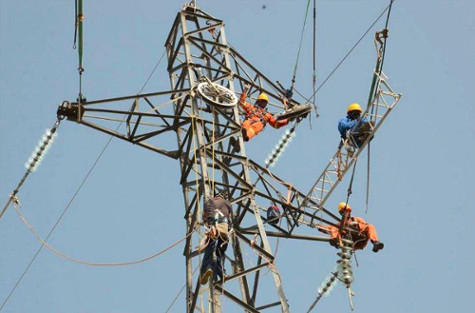
‘Cameroon’s Electricity Provider Needs to become More Transparent, Accountable.’
Introduction
Should the government run and manage electricity grids? It’s a question that depends on whether the state has the capacity to manage complex infrastructure. 76% of Cameroonians have access to electricity, but sometimes, we go two days without. I am writing as a resident in the urban centre of Yaounde, the capital city. ENEO, the national electricity provider, was renationalised after years of power outages, freeing ACTIS, a British private equity firm, to invest elsewhere.
A few weeks ago, ENEO became SOCADEL with a capital estimated at FCFA 43 903 690 000. Over 66% of state-owned companies or parastatals are loss-making, creating serious doubt about the state’s ability to effectively supply citizens with electricity and make a profit. Naturally, our friends in the public sector are confident that the private sector should hold no role in critical infrastructure, as this increases costs over time, even if the quality of service improves. To be clear, there are examples of state-owned companies that are profitable, with consumers experiencing stable access to electricity.
The Criticism Stacks up with Evidence!
When you look across Africa, there are very few state-owned companies that make a profit, as they tend to be burdened with subsidized consumer tariffs, poorly maintained grids, and high levels of domestic or foreign debt. So our bias for privately-run electricity providers simply comes down to efficiency. In Cameroon, 71% of citizens have access to electricity, with important disparities between urban and rural areas. While 90% of urban dwellers have access to electricity, only 25% of rural Cameroonians have access to electricity. Whether the name change improves electricity access remains to be seen.
Some African State-Owned Companies Make Profits
A minority of state-owned electricity companies in Africa indeed make profits, but the quality of service is usually lacking. For example, KenGen, who is70% owned by the Kenyan government, exploits the Great Rift Valley for low-cost geothermal steam that has shielded it from expensive imports or generation from hydro.
For ESKOm in South Africa, it is more complicated than merely reporting profits. Power outages in South Africa are so frequent that people resort to generators to trade, transact, and live. A massive operational pivot that ended load-shedding (black-outs), government debt relief, and standard tariff increases saw Q1 profits reach 24.3 Billion ZAR ($1.35B USD).
However, a few government-owned power utilities buck this trend. They manage to stay profitable by using specific strategies: unbundling generation from transmission, heavy investments in low-cost renewable energy (like geothermal or hydro), and serving as regional power exporters.
Of course, we can find examples of profit-making state-owned enterprises. The era of heopoltiics and cyber attacks has caused a natural concern for national security, especially for critical infrastructure. As private companies are more concerned about cost as opposed to national security (in most cases), this leaves states vulnerable to foreign attacks. However, national security concerns hold water in countries where 90%+ of the population has access to electricity. For Cameroon, our medium-term strategy should be increasing electricity access through public-private ownership to balance state interest with private sector profit-making incentives.
Poor Management Yields Bad Results
Before we get started, it is important to note that many Directors in State-owned companies have exceeded their ten-year mandate. So it is hard to take Article 30 seriously when directors overstay their nominations with no institutional recourse to replace such Directors. When individuals capture institutions, there is no accountability, knowledge transfers, or roadmaps that allow civil society to hold them to account.
The State Does not Repay its Debt to the Electricity Company it Owns on Time: Secondly, the state owes huge sums of money to SOCADEL. The state is profligate in its debt towards ENEO because it cannot hold itself to account. In exchange for these late payments, standards are allowed to lapse, and the state-owned company provides electricity to only 25% of rural dwellers #Unacceptable. The perverse incentive for the state to own the electricity provider is clear. This is why each ministry must transition to solar and free up valuable electricity in the grid to serve other rural and urban centres.
Unfairness or Corruption?
The board of the newly named “SOCADEL” is entirely French-speaking. To mention this is to be institutionally cancelled, but how can 20% of citizens be absent from the board of the nationally-owned electricity provider? It is no surprise that only 25% of rural dwellers have access to electricity, and most of them are located in English-speaking regions. Never mind that the audited financial statements and annual reports have to be shared online for all to see.
Capacity and Resistance to Change
What is worse is the inability of these companies to recognise the lack of capacity and design verifiable and measurable plans to upskill and train their engineers. These days, applying decentralized solutions for communities with 15,000 or fewer people should be simpler. Some examples have already worked, like in Maroua and Guider. These solar installations and plants were built in partnership by SOCADEL (Formerly ENEO) and Release (a subsidiary of Scatec). These plants have a combined capacity of and include significant battery storage and 64MW. For communities like Zina in the Far North with strong solar exposure, there is scope to increase the use of photovoltaics.
Conclusion
There are some cases where state-owned electricity companies have delivered profitability and higher electrification rates. However, SOCADEL faces intractable problems that must be addressed now to ensure that Cameroon is not crawling towards industrialisation by 2030. The government may be justified in its nationalisation drive, but if they fail to guarantee stable electricity for all Cameroonians, then it’s a bet that will fail. Going forward, we should ensure that 30% of companies are privately owned to ensure some balance, accountability, and greater certainty in results.
Authors
Henri Kouam, Economist & Executive Director
Haiwang Djamo, National Coordinator & Policy Analyst