Boosting the Tech Setcor in Cameroon and Burundi: Prospects for the AfCFTA
April 27, 2026

Economic Implications of the Pan-African Payment and Settlement Systems (PAPSS) on Inflation and Financial Stability
April 28, 2026Introduction
Signed in 2018 by 44 African Union member states, the African Continental Free Trade Area (AfCFTA) is a flagship project of the African Union designed to reduce tariff and non-tariff barriers across Africa, accelerate industrialization, integration, and boost standards of living. The World Bank estimates that African incomes could rise by $450 billion, while findings from our flagship Trade Report find that the AfCFTA could boost Cameroon’s GDP by 2.5% by 2030, while exports of agricultural products could rise by $6.5 million during this period.
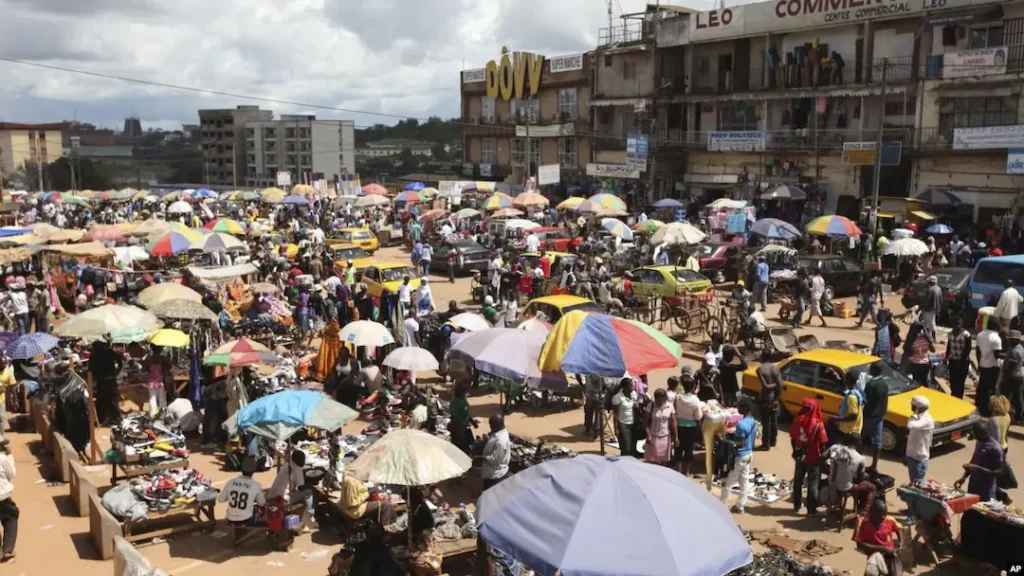
However, it is not clear how informal sector workers and production units in the agricultural sector will benefit from the AfCFTA. It is important to assess the impact of the AfCFTA on the agriculture sector that employs over 55% of active age workers, 2 million households, 60% of women who produce 90% of Cameroon’s food crops like cassava, tomatoes, yams, beans, and potatoes. Furthermore, the agriculture sector contributes 20% of GDP in Cameroon and constitutes an important part of exports, driven by cocoa, coffee, banana, rubber, and timber, to name a few.
This policy brief analyses the potential implications of the AfCFTA on the informal agriculture sector and its ability to integrate formal value chains. This brief is divided into four parts. Section one outlines the structure of the informal agriculture sector, Section two outlines the Development of Informal Sector Agri-preneurs, while Section three illustrates how they can integrate formal and export-oriented value chains.
i. Cameroon’s Informal Agriculture Sector
The informal sector employs nearly 9 out of 10 workers, the majority of whom are young people and women (ILO, 2021). Over 53.5% of workers in the informal sector work in the agriculture sector, while 46.5% operate in the non-agriculture sector. Meanwhile, the agriculture sector as a whole employ 43.4% of workers, with 94.1% of workers in rural areas operating in the informal sector. Looking at women alone, roughly 36.6% of working-age women are employed in agriculture, supporting maize, cassava, and potatoes production, to name a few. Additionally, the average income for informal workers in rural areas (primarily agriculture) is approximately 59,520 CFA francs (approx. $98 USD) lower than the estimated FCFA 135,729 monthly living wage in Cameroon.
Meanwhile, 9 out of 10 Informal Production Units (IPUs) employ 1.2 people, and the sector suffers from low productivity due to limited access to modern inputs (only 12% of farmers have access to agricultural guarantees), limited access to finance, and deficient infrastructure. However, the sector is responsible for 100% of cash crops, with the majority of operators located in rural areas. This makes them more likely to engage in internal trade, despite growing opportunities to integrate formal agro value chains under the AfCFTA.
ii. The Development of Informal Sector Agri-preneurs
Cameroon’s informal agro-sector continues to focus more on local development and rarely on external trade. Informal agri-preneurs farm food crops that are sold at local markets. Admittedly, previous programs, initiatives, and strategies to help informal agro-entrepreneurs transition to the formal economy have not yielded significant benefits. PIAASI and other Integrated Support Programs for Informal Sector Actors aimed to encourage formalization have not boosted production. 1000 tractors and 200 community-funded workshops between 2021 – 2024 benefit formal actors, not informal ones. Recent initiatives that reduce taxes for SMEs and suspend income tax payments for new employees less than 35 years old can encourage formalization.
However, the AfCFTA is creating bright spots for informal sector agri-preneurs. Cameroon, located in Central Africa, shares land borders with six countries: Nigeria to the northwest, Chad to the north, the Central African Republic (CAR) to the east, and the Republic of the Congo, Gabon, and Equatorial Guinea to the south. It trades freely with all these countries except Nigeria, which is not part of its customs union. So, the AfCFTA will likely boost two-way trade for informal sector actors with Nigeria more than the other countries that are part of the CEMAC sub-region. Nigeria is Cameroon’s second-largest informal trading partner, accounting for 30.8% of trade flows driven by illegal exports of cocoa beans, representing 63.9% of informal revenues. Lack of knowledge of increasingly streamlined administrative procedures, preferential tax rates, and ill-adapted business formalization sites have slowed the development of the informal.
iii. How Can Informal Sector Agriculture Workers Integrate Formal Value Chains
The agro-processing sector in Cameroon is developing fast, driven by its import substitution strategy that seeks to slow exports in favor of domestic products like cassava flour, snacks, milk, beef, etc. This has created demand for food crops, which gives informal sector workers in the agriculture sector opportunities to integrate formal value chains. Listing websites like E-buy make it easier for farmers to list their products, but only 45% of Cameroonians have access to a smartphone, and internet access is expensive vis-à-vis farmer earnings. So, this excludes large groups of producers.
iv. EKOK as the Gateway for Eru Farmers to Nigeria
At first glance, informal sector workers in border towns like Ekok and Amchide are the likely beneficiaries of the AfCFTA. Eru (Gnetum spp), bush mango, and palm oil are some of the products that will readily benefit from the AfCFTA. Cameroon exports about 4000 tons of eru annually to Nigeria or FCFA 4 billion, which creates opportunities for informal actors in border towns. This includes planters, harvesters, local fertilizer companies, and logistics operators, to name a few. However, food crops like plantains and yams are equally likely to see a boost in exports, allowing Nigerian entrepreneurs and agro entrepreneurs to source from Cameroonian producers.
Furthermore, large grain processing companies like Nalmaco, which use maize, sorghum, and soybeans, will create new opportunities for informal agri-preneurs in Cameroon as lower tariffs stimulate trade. Soybean processing plants in Yato, like SOPROICAM, with operations in the far North, are equally potential buyers of Cameroonian products.
Maize, Soybeans, and Cassava farmers Could See Boost of Exports to Nigeria.
Informal agri-preneurs located close to urban centers will leverage Obasanjo Agro-Allied Business Ltd’s (OABL) $700 million agro-allied businesses near the Kribi deep-sea port, which will strengthen cross-border trade for maize and soybeans, with employment opportunities in packaging and warehouse facilities. It is important to note that 88% of informal trade happens in the Ekok border post and the Guéli Bridge, and farmers will equally support the development of the Special Agro-Industrial Processing Zones (SAPZ) along the Cross River that borders Cameroon. Finally, cassava producers will link to Pafic Sarl and Niji foods, while palm oil producers can leverage stable supply chains of Exportex to access Nigerian markets.
v. Proposed Solutions & Pathways to Industrialization
- If policymakers hope to formalize more informal sector agri-preneurs, they should make the receipt of seeds, fertilizer, and other inputs contingent on the formal registration of these entities. Besides, the commercialization of agricultural outputs could be done through cooperatives and business registrations coordinated through these cooperatives.
- Furthermore, greater efforts must be made to educate, inform, and sensitize informal sector worker son the benefits of formalization, such as a reduced tax rate. Leverage the 30% tax relief for agropastoral investments and the 5-year business license exemption (Advocated by CEPI in 2023 – 2024) to incentivize IPU formalization.
- Cross-border trade should simplify formalization by providing informal traders and transporters with cards that ensure a minimum contribution for cross-border trade.
- Greater efforts to match local informal sector workers and agro-processing companies are warranted to ensure that the gains of free trade are spread across the formal and informal sectors and ultimately improve job security, working conditions, and supply chain resilience over the long run.
Conclusion
The AfCFTA offers Cameroon a historic opportunity to boost GDP and agricultural exports, but success depends on integrating the informal sector—the backbone of its food security and female employment. Current barriers, including limited digital access and low productivity, must be addressed to bridge the gap between rural production and formal value chains. By simplifying cross-border trade regulations at gateways like Ekok and linking agricultural inputs to formal registration, policymakers can empower informal agri-preneurs. Ultimately, aligning these actors with agro-processing giants will ensure that free trade drives industrialization, raises rural incomes, and secures long-term economic resilience for informal sector agri-preneurs.
Reference List
- 237 Online. (2025). Cameroon: PIAASI: Hard Times to Recalcitrant Beneficiaries, https://www.237online.com/cameroon-piaasi-hard-times-to-recalcitrant-beneficiaries/
- Arise News. (2025). Agro-Industries: AFDB, Nigeria Flag Off Special Processing Zones, https://www.youtube.com/watch?v=Ddmua-uodaY&t=4s
- Business in Cameroon. (2025). Nigeria captured CFA41.4 bn of Cameroon’s informal cocoa exports in 2024, https://www.businessincameroon.com/transport/0110-15119-nigeria-captured-cfa41-4-bn-of-cameroon-s-informal-cocoa-exports-in-2024
- Business in Cameroon. (2025). Obasanjo to Invest $700mln in Kribi to Boost Cameroon-Nigeria Trade, https://www.businessincameroon.com/public-management/3103-14559-obasanjo-to-invest-700mln-in-kribi-to-boost-cameroon-nigeria-trade#:~:text=Olusegun%20Obasanjo%2C%20Nigeria’s%20former%20president,five%2Dstar%20hotel%20in%20Kribi.
- Exportex Agro. (2025). Welcome to Exportex Agro, https://exportexagro.com/#:~:text=Bridging%20Agro%20innovation%20and%20sustainable,development
- Kouam, H., Nchofoung, T., Djamo, H., & Tchoffo, R. (2024). The Impact of the Economic Partnership Agreement (EPA) and the African Continental Free Trade Area (AfCFTA) on the Cameroonian Economy, Cameroon Economic Policy Institute (CEPI), Henri Kouam Foundation, https://camepi.org/wp-content/uploads/2024/10/The-Impact-of-the-Economic-Partnership-Agreement-and-the-African-Continental-Free-Trade-Area-2-1.pdf
- Kouam, H., & Malah-Kuete, Y. F. From Property to Prosperity. https://camepi.org/wp-content/uploads/2026/03/Womens-Property-Rights-are-Vital-for-Poverty-Reduction-Cameroon.pdf
- Kouam, Henri & Ivo, Tassah, Reducing Post-Harvest Food Loss in Cassava and Tomato Value Chains in Cameroon (October 01, 2025). Available at SSRN: https://ssrn.com/abstract=5988135 or http://dx.doi.org/10.2139/ssrn.5988135
- Ndumbe, L. J. (2013). Unshackling Women Traders: Cross-border Trade of Eru from Cameroon to Nigeria, World Bank, No. 79711, https://documents1.worldbank.org/curated/en/262591468292477021/pdf/797110BRI0PN380Box0377384B00PUBLIC0.pdf
- Soproicam. (2025). Who are we, https://www.soproicam.com/en/nous-connaitre/
- World Bank. (2024). African Continental Free Trade Area (AfCFTA) : Supporting Implementation with a Focus on Investment – Synthesis Note on Key Findings and Emerging Lessons – Executive Summary (English). Washington, D.C. : World Bank Group. http://documents.worldbank.org/curated/en/099122624180027245
Authors
Henri Kouam, Founder & Executive Director
Dr. Tii Nchofoung, Research Fellow
Dr. Egbe-Njie Fride, Research Fellow