Free Market Reforms Will Unleash the True Gains of the AfCFTA
May 11, 2026
The Role of the AfCFTA in Advancing Food Security in Central Africa
May 23, 2026
Introduction
In Cameroon, development policies have followed one another, each with lofty ambitions and promises of economic transformation. Following the Strategy Paper for Growth and Employment (DSCE), implemented between 2010 and 2020, Cameroon has adopted a new roadmap: the National Development Strategy 2020–2030 (SND30). The latter aims to be more ambitious, more structured, and above all geared toward achieving an emerging economy by 2035. It also aims to correct the shortcomings of the previous strategy (the DSCE). The mid-term evaluation report on the SND30 by the Ministry of Economy highlights missed targets in nearly all sectors. As a result, does the SND30 truly address the limitations of the DSCE, or are we witnessing a repetition of the same weaknesses?
Clearly, the SND30 offers an improvement in terms of vision. Whereas the DSCE emphasized growth and infrastructure, the SND30 places greater emphasis on structural transformation, industrialization, and private-sector development. On paper, it must be acknowledged that there is a genuine desire for a paradigm shift. But when we look at the concrete results so far, there are reasons to be skeptical. This paper focuses on three main areas: namely, the persistent limitations regarding growth and structural transformation; the challenges related to employment, poverty, and financing; and finally, the reforms needed to avoid a repeat of past failures.
1. Persistent Constraints on Growth and Structural Transformation
First, regarding economic growth. The DSCE had led to relative progress, with growth rising from approximately 3% to an average of 4.6% between 2010 and 2018. While this represented an improvement, it fell short of the 5.5% target. The SND30, for its part, aims for a much higher growth rate, around 8%, considered necessary to trigger a genuine economic transformation. In reality, however, between 2020 and 2025, growth remained around 3% to 4%. In other words, not only are the targets far from being met, but the pace of growth has not changed significantly compared to the previous period. This clearly leads us to ask whether we can speak of economic transformation without a real acceleration in growth.
As for the structural transformation of the economy, it appears that this was one of the DSCE’s main objectives. While significant investments were certainly made, Cameroon’s economy remained dominated by the service sector, with a relatively small contribution from industry, and in some cases, even a decline. The SND30 was therefore intended to address this by prioritizing industrialization, the local processing of raw materials, and the upgrading of the economy. That said, at this stage in particular, the changes remain limited. Industry has not yet taken off as expected, and the structure of the economy remains largely the same. The country continues to export mainly raw products, with little local value added (UNECA, 2018). This lack of real processing is therefore a cause for concern, as it limits Cameroon’s ability to create sustainable wealth.
- Challenges Related to Employment, Poverty, and Financing
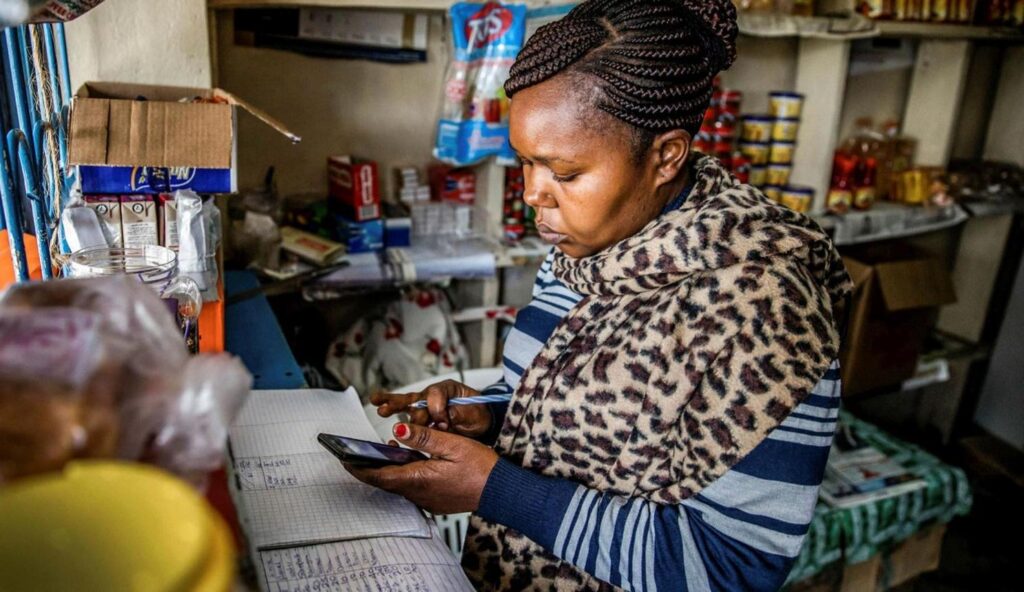
Under the DSCE, economic growth has not been sufficiently inclusive. Underemployment has worsened, and poverty has declined only marginally. One of the major objectives of the SND30 was precisely to make growth more inclusive by creating more jobs and improving people’s living conditions. But here again, results have been slow to materialize. The informal sector continues to dominate the labor market (90%), and formal employment opportunities remain limited, particularly for young people. This shows that the link between economic growth and job creation remains weak, leading us to conclude that this is a persistent structural weakness.
No matter how sound a strategy may be, it cannot produce results without adequate resources. However, it is estimated that approximately 50% of the funding needed to implement the SND30 has not yet been secured. This budgetary constraint severely limits the government’s ability to invest in key sectors, particularly infrastructure, industry, and human capital. It also undermines the strategy’s credibility among technical and financial partners. To be clear, there is a significant gap between stated ambitions and available resources.
3. Given these findings, what conclusions should we draw?
On the one hand, it is clear that the SND30 has not yet succeeded in significantly addressing the weaknesses identified in the DSCE. Problems such as insufficient growth, low levels of industrialization, high unemployment, and financing constraints persist. From this perspective, there is indeed a sense of continuity within certain limits. But on the other hand, it would still be an overstatement to speak of a total failure. The SND30 introduces relevant policy directions, particularly regarding structural transformation and private sector development. The real problem may not lie in the quality of the strategy, but in its implementation. Challenges related to governance, public policy coordination, and resource mobilization remain critical.
Cameroon certainly does not appear to be moving backward, but neither is it progressing at the pace needed to achieve its development goals. The SND30 represents a real opportunity, but this opportunity can only be seized if far-reaching reforms are implemented, particularly to improve the effectiveness of public policy, strengthen the business climate, and mobilize additional funding.
Recommendations
- Cameroon should establish an independent monitoring and evaluation mechanism tasked with regularly publishing publicly accessible reports on the progress of the SND30.
- Cameroon must gradually move away from a model based on the export of raw materials. To this end, the government should prioritize support for local industries capable of processing national resources
- Strengthen development financing by further mobilizing the private sector
- Make economic governance a national priority: the difficulties in implementing development strategies in Cameroon are largely linked to problems of governance, administrative delays, and poor coordination of public policies.
- Cameroon should encourage the gradual formalization of the informal sector through simplified taxation, easier access to financing, digitized and accessible administrative procedures, and entrepreneurship training.
Conclusion
The transition from the DSCE to the SND30 does not yet mark a decisive break with the past. Rather, it reflects a desire to address past shortcomings, though the results of these efforts remain, for now, insufficient. The risk today is not so much that the same policies will be repeated, but that the same results will be reproduced. And this is precisely what Cameroon must avoid if it truly wishes to transform its economy. Cameroon should improve governance and the implementation of public policies, and accelerate transformation by relying more on the private sector and effectively mobilizing financing.
Reference List
- African Development Bank. (2023). Country Strategy Paper Cameroon 2023–2028. https://www.afdb.org/sites/default/files/documents/projects-and-operations/cameroun_-_country_strategy_paper_csp_2023-2028.pdf
- Banque Africaine de Développement. (2009). Document de Stratégie pour la Croissance et l’Emploi (DSCE) 2010-2020 du Cameroun. African Development Bank. https://www.afdb.org/fileadmin/uploads/afdb/Documents/Project-and-Operations/Cameroon%20DSCE2009.pdf
- Expression Économique. (s. d.). SND30 : performances en dessous des attentes. https://expressioneconomique.com/snd30-performances-en-dessous-des-attentes/
- Kouam, H. (2021). Financial stability and liquidity risks in the banking sector across the CEMAC region. Business & Management Studies: An International Journal, 9(1), 343-354. https://www.bmij.org/index.php/1/article/view/1788
- H Kouam. (2025). Economic Implications of the Pan-African Payment and Settlement Systems (PAPSS) on Inflation and Financial Stability, Cameroon Economic Policy Institute (CEPI)
- MINEPAT. (2025). Rapport d’évaluation à mi-parcours de la mise en œuvre de la Stratégie nationale de développement 2020-2030 (SND30). Scribd. https://fr.scribd.com/document/991185164/Rapport-d-Valuation-Mi-Parcours-de-La-SND30-1769532843
- Proparco. (2020). Cameroun : 90 % de la force active piégée dans le secteur de l’informel. https://www.proparco.fr/fr/article/cameroun-90-de-la-force-active-piegee-dans-le-secteur-de-linformel
- République du Cameroun. (2020). Stratégie nationale de développement 2020-2030 : Pour la transformation structurelle et le développement inclusif. Base de données FAOLEX. https://faolex.fao.org/docs/pdf/cmr211554.pdf
- UNECA (2018). STEPS Cameroon Profile: Structural Transformation, Employment, Production and Society. https://archive.uneca.org/fr/publications/transformation-structurelle-emploi-production-et-soci%C3%A9t%C3%A9-steps-cameroun-2018
- UNECA. (2018). Structural transformation with a focus on employment, production and society (STEPS): Analysis of five countries (Ethiopia, Cameroon, Morocco, Zambia and Benin). https://archive.uneca.org/sites/default/files/uploaded-documents/STEPS/2018/cameroon.pdf
Authors
Haiwang Djamo
National Coordinator/Research Analyst