From the DSCE to the SND30: Is Cameroon Facing a Repeat of Its Structural Weaknesses?
May 12, 2026
The Ban of Maize Imports Brings More Problems Than Solutions
May 23, 2026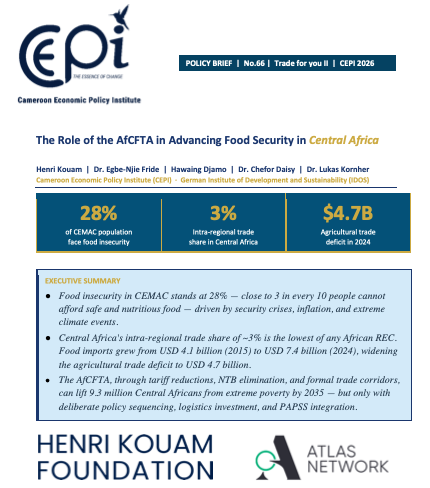
EXECUTIVE SUMMARY
- Food insecurity in CEMAC stands at 28% — close to 3 in every 10 people cannot afford safe and nutritious food — driven by security crises, inflation, and extreme climate events.
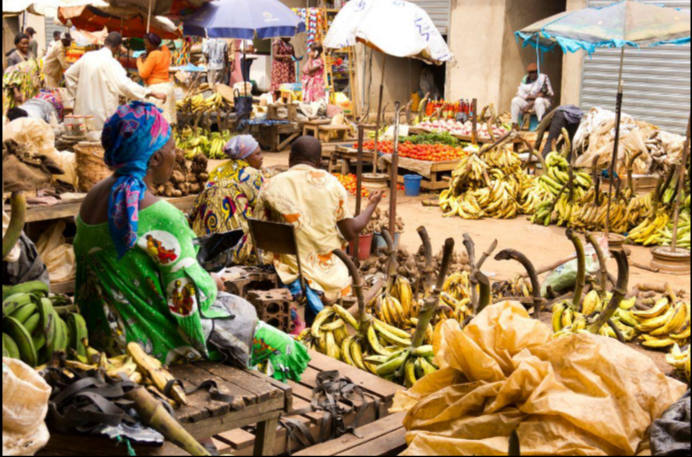
- Central Africa\’s intra-regional trade share of ~3% is the lowest of any African REC. Food imports grew from USD 4.1 billion (2015) to USD 7.4 billion (2024), widening the agricultural trade deficit to USD 4.7 billion.
- The AfCFTA, through tariff reductions, NTB elimination, and formal trade corridors, can lift 9.3 million Central Africans from extreme poverty by 2035 — but only with deliberate policy sequencing, logistics investment, and PAPSS integration.
To Cite: Kouam, H., Egbe-Njie, F., Djamo, H., Chefor, D. & Kornher, L. (2026). The Role of the AfCFTA in Advancing Food Security in Central Africa, No. 66, Cameroon Economic Policy Institute (CEPI), Henri Kouam Foundation
Authors
Henri Kouam, Executive Director
Dr. Egbe-Njie Fride, Research Fellow
Haiwang Djamo, National Coordinator and Research Analyst
Dr. Chefor Meungwe Daisy, Research Fellow
Dr.Lukas Kornher, German Development Institute