Unlocking Youth Entrepreneurship in Cameroon: Opportunities and Reforms to Enhance AfCFTA Integration.
October 27, 2026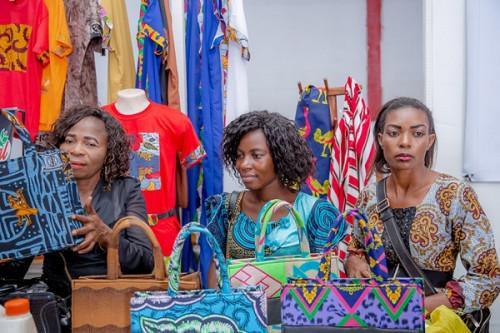
Introduction
Tax policy in Central Africa is usually seen through a policy or technical lens, where the fiscal framework is designed for all citizens, without accounting for the peculiarities of vulnerable groups like women and youths. In a country like Cameroon, where discriminatory social norms are entrenched, the national tax policy tends to exacerbate gender inequality. This includes regressive indirect taxes and difficult tax procedures that disproportionately impact women.
While most of us think fiscal policy must be overhauled, we think so for different reasons. Achieving the objectives set in the National Development Strategy 2020-2030 (SND30) means that fiscal policy cannot remain a tool solely for taxes and revenue extraction. While all the authors agree that the current corporation tax rate is acceptable and must not be lowered under any circumstances (after some modelling), Sonia and Dr. Egbe-Njie argue that fiscal policy must become gender-sensitive to account for the 51% of women operating informally and 23% of them leading manufacturing firms.
Gender-Neutral Fiscal Policy? A New Concept for Us
Henri notes that the General Tax Code (Code Général des Impôts) has very few provisions that differentiate between men and women. However, gender bias tends to occur when seemingly natural tax rules exacerbate unequal outcomes and worsen socio-economic disparities that are already stark in Cameroon. According to Institut National de la Statistique (INS Cameroun), 50% of Cameroonians are women, and they remain overrepresented in the informal sector, facing persistent wage inequality driven by factors such as limited access to credit and barriers to owning property. Dr. Langmi notes that our tax systems are mostly supported by consumption taxes, which disproportionately hit those with the lowest incomes – especially women.
The Cameroon Economic Policy Institute (CEPI) and the International Monetary Fund (IMF) have consistently stated that value-added tax (VAT) and other consumption levies tend to be regressive. Dr. Egbe-Njie and Sonia note that because women spend a significant share of their income on necessities (food, energy, healthcare, school supplies, etc.), they are significantly hit by the 19.25% VAT rate. While we successfully got the government to lower VAT for locally-made flour, the scope of these exemptions is narrow and tends to be reversed after a few years.
The Informal Economy and the Trap of Taxation
Taxation intersects very clearly with women working in the informal sector, which holds 90% of people who are considered to be working age (15 – 59 years). Women make up 50% of workers in the informal sector, operating as micro-entrepreneurs in salons, fashion design, restaurants, communications, etc. They are kept out of the formal sector by a mix of structural and cultural factors. Cameroon’s private sector creates very few jobs, but even if it did create enough, women will continue to be held back by unpaid care responsibilities and discrimination, argue Sonia and Dr. Egbe-Njie. As we see in the next paragraph, complex tax registration procedures, expensive compliance costs, and aggressive enforcement discourage women from transitioning to the formal sector.
For Female Entrepreneurs, this is Worse than the Statistics
A study from CEPI finds that local market levies and municipal taxes (impôt libératoire) fall disproportionately on microbusinesses while large companies benefit from tax incentives, exemptions, and depreciation allowances. The World Bank also finds that 34.2% of Cameroonians view tax administration as the primary barrier to formalizing their activities, not the tax rate, as we have pointed out before. Furthermore, the World Bank’s Women, Business and the Law report scores Cameroon’s entrepreneurship at 60 out of 100, highlighting the unequal nature of the tax system.
Wealth Taxation, Personal Income, and Structural Bias
Henri states that we don’t need one paragraph for income tax. The government begins taxing people at very low levels of earnings, which means many people at risk of food poverty or food insecurity must pay taxes. If personal income tax thresholds begin at income levels close to the poverty line, it means that low-wage female workers are taxed as soon as they enter formal employment. The capital gains tax on stocks, bonds, and property is 16.5%, but as men own more property, they benefit more than women.
The Global Alliance for Tax Justice (GATJ) finds that wealth taxes help redistribute income from elite landholders to low-income earners. The government cannot enforce a wealth tax properly and so must rely on consumption taxes to support its budget. Adam Smith in The Theory of Moral Sentiments and The Wealth of Nations warned against market concentration and worrying forms of inequality.
Expenditure as the Flip Side of Fiscal Equity
We all agree that the government can only spend what it can raise, even as it can borrow a part. But we all concede that taxes must be collected fairly, and they should be spent in a way that brings credibility to tax collection. Henri says we must ban 4×4 cars that exceed $25,000 for every public sector employee (Rwandan style), because there is nothing wrong with driving a Toyota Rav 2 or other similar car that is good for bad roads.
Sonia naturally applauds the Ministry of Finance (MINFI) for a circular mandating Gender-Responsive Budgeting (Budgétisation Sensible Au Genre – BSG), but Henri’s visits to our friends in the public sector show that implementation across ministries remains inconsistent. When tax revenues are absorbed by inefficient subsidies and public spending, it affects public investments that are vital for women and tend to be underfunded.
Dr. Egbe-Njie supports the view and adds that public investments that address women’s unpaid work, such as access to water and electricity, bring about substantial macroeconomic returns. A tax system like ours that fails to mobilize sufficient domestic savings tends to shift the tax burden to consumption, impacting the development of a public safety net and shifting the burden further to women. A woman looking after a family of five has little time for self-development in a patriarchal society.
A Blueprint for Progressive Fiscal Reform
We can take some actions to ensure the tax system aligns with Cameroon’s gender ambitions. We are not saying we should move to a gender-responsive design today, as we need further work to establish what reforms will produce the best gender-neutral effects – but we hope to share more comprehensive work by 2028 to help with step-by-step, empirically tested guides for tax authorities.
Gender-Responsive Tax Audits: MINFI and MINEPAT should normalize gender-sensitive assessments of specific policies and proposed tax legislation. We need to measure, test, and monitor the impact of said policies to improve them. Failure to do pre- and post-analysis could lead to paralysis.
Overhaul Indirect Tax Exemptions: The government must normalize zero value-added tax for specific products such as locally-made flour, agricultural inputs, and health supplies. This will support low-income families and boost food security.
Rationalize Business Taxation for Female-Led SMEs: CEPI recommends maintaining the current corporate income tax for SMEs at 25%, and policymakers must ensure the rate never falls below this mark. However, there should be greater focus on local taxes and levies to ensure that women are not subject to burdensome regulation. Finally, all payment of taxes must be digitized to prevent harassment and support voluntary declarations.
Shift toward Progressive Direct and Wealth Taxes: Policymakers should consider raising the personal income tax exemption thresholds in an attempt to protect low-income earners. We should tax real estate and capital accumulation – around 20% on the low end and 45% above a certain threshold. “We believe in the free markets, not regressive taxes” – Henri Kouam
Institutionalize Gender-Responsive Budgeting (BSG): Gender-responsive budgeting must be implemented with regular consultations with civil society and legally binding frameworks. We must ban any cars that cost more than $25000 and punish illicit enrichment faster and more quickly.
Conclusion
Taxation must evolve beyond being numbers on a balance sheet to reflect our shared values of inclusive economic prosperity. Cameroon cannot become an emerging country if taxes and fiscal policy are extractive while waste persists in government procurement with a bloated operational bill. Development cannot happen while leaving 50% of the population behind. We agree to varying degrees that addressing the implicit bias and reinvesting revenues in vital infrastructure and human capital will make fiscal policy a driver of sustainable economic growth.
Reference List
African Tax Administration Forum (ATAF). (2022). Are Tax Policies Developed to Reduce Gender Inequality in ATAF Member Countries? Pretoria: ATAF. Available at: https://ataftax.org/ (Accessed: 1 September 2026).
Koum, H. (2026). Impact of Taxes on Women Entrepreneurs in Cameroon. Yaoundé: CEPI, Henri Kouam Foundation. Available at: https://camepi.org/impact-of-taxes-on-women-entrepreneurs-in-cameroon/ (Accessed: 1 September 2026).
Global Alliance for Tax Justice (GATJ). (2021). Framing Feminist Taxation: Making Taxes Work for Women. Bogota: Global Alliance for Tax Justice. Available at: https://www.taxjustice.info/ (Accessed: 1 September 2026).
International Labour Organization (ILO). (2023). Women and Men in the Informal Economy: A Statistical Update. Geneva: International Labour Office. Available at: https://www.ilo.org/ (Accessed: 1 September 2026).
International Monetary Fund (IMF). (2023). Gender and Revenue Administration: Principles and Practices. IMF Technical Notes and Manuals 2023/004. Washington, DC: International Monetary Fund. Available at: https://www.elibrary.imf.org/view/journals/005/2023/004/article-A001-en.xml (Accessed: 1 September 2026).
Institut National de la Statistique (INS Cameroun). (2020). Troisième Enquête Démographique et de Santé (EDSC-III). Yaoundé: Institut National de la Statistique du Cameroun. Available at: https://www.ins-cameroun.cm/ (Accessed: 1 September 2026).
Ministère de l’Économie, de la Planification et de l’Aménagement du Territoire (MINEPAT) (2020) Stratégie Nationale de Développement 2020-2030 (SND30). Yaoundé: République du Cameroun. Available at: https://www.minepat.gov.cm/ (Accessed: 1 September 2026).
Ministère des Finances (MINFI). (2024). Code Général des Impôts 2024. Yaoundé: Direction Générale des Impôts, République du Cameroun. Available at: https://www.impots.cm/ (Accessed: 1 September 2026).
World Bank. (2024). Women, Business and the Law 2024. Washington, DC: World Bank Group. Available at: https://wbl.worldbank.org/ (Accessed: 1 September 2026).
World Bank. (2025). Cameroon Economic Update: Mobilizing Domestic Revenue for Inclusive Growth. Washington, DC: World Bank Group. Available at: https://www.worldbank.org/en/country/cameroon (Accessed: 1 September 2026).
Authors
Henri Kouam, Executive Director
Dr. Egbe-Njie Fride, Research Fellow
Dr. Langmi Degha, Research Fellow