Iran–United States–Israel Conflict: Africans must Brace for Inflation or Begin Refining More Oil
April 25, 2026
Boosting the Tech Setcor in Cameroon and Burundi: Prospects for the AfCFTA
April 27, 2026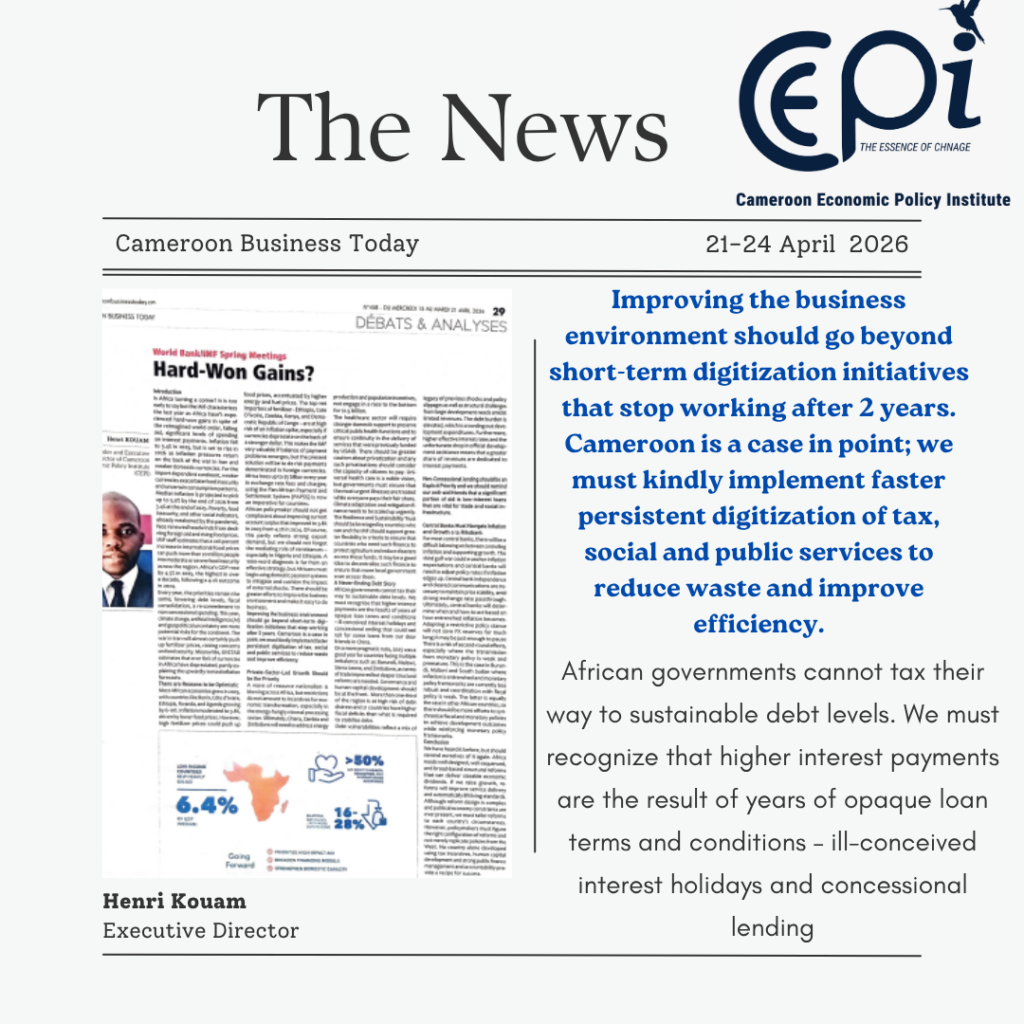
Introduction
Is Africa turning a corner? It is too early to say, but the IMF characterizes the last year as Africa hasn’t experienced hard-won gains in spite of the reimagined world order, falling aid, and significant levels of spending on interest payments. Inflation fell to 3.4% in 2025, but is set to rise in 2026 as inflation pressures return on the back of the war in Iran and weaker domestic currencies. For the import-dependent continent, weaker currencies exacerbate food insecurity and uncertain consumption patterns.
Median inflation is projected to pick up to 5.0% by the end of 2026 from 3.4% at the end of 2025. Poverty, food insecurity, and other social indicators, already weakened by the pandemic, face renewed headwinds from declining foreign aid and rising food prices. IMF staff estimates that a 20% percent increase in international food prices can push more than 20 million people into moderate or severe food insecurity across the region. Africa’s GDP rose by 4.5% in 2025, the highest in over a decade, following a 4.2% outcome in 2024.
Every year, the priorities remain the same: lowering debt levels, fiscal consolidation, and a re-commitment to non-concessional spending. This year, climate change, artificial intelligence (AI), and geopolitical uncertainty are potential risks for the continent. The war in Iran will almost certainly push up fertilizer prices, raising concerns about food security. Meanwhile, UNCTAD estimates that over 80% of currencies in Africa have depreciated, partly explaining the upwardly revised inflation forecasts.
There are Reasons to be Optimistic
Most African economies grew in 2025, with countries like Benin, Côte d’Ivoire, Ethiopia, Rwanda, and Uganda growing by 6-10%. Inflation moderated to 3.8%, driven by lower food prices. However, high fertilizer prices could push up food prices, accentuated by higher energy and fuel prices. The top net importers of fertilizer – Ethiopia, Cote D’ivoire, Zambia, Kenya, and the Democratic Republic of Congo – are at high risk of an inflation spike, especially if currencies depreciate on the back of a stronger dollar. This makes the IMF very valuable if balance of payment problems emerge, but the present solution will be to de-risk payments denominated in foreign currencies. Africa loses up to $5 billion every year in exchange rate fees; using the Pan-African Payment and Settlement System (PAPSS) is now an imperative for countries.
African policymakers should not get complacent about improving the current account surplus, which improved to 3.8% in 2025 from 4.2% in 2024. Of course, this partly reflects strong export demand, but we should not forget the mediating role of remittances – especially in Nigeria and Ethiopia. A 1000-word diagnosis is far from an effective strategy, but Africans must begin using domestic payment systems to mitigate and cushion the impact of external shocks. There should be greater efforts to improve the business environment and make it easy to do business.
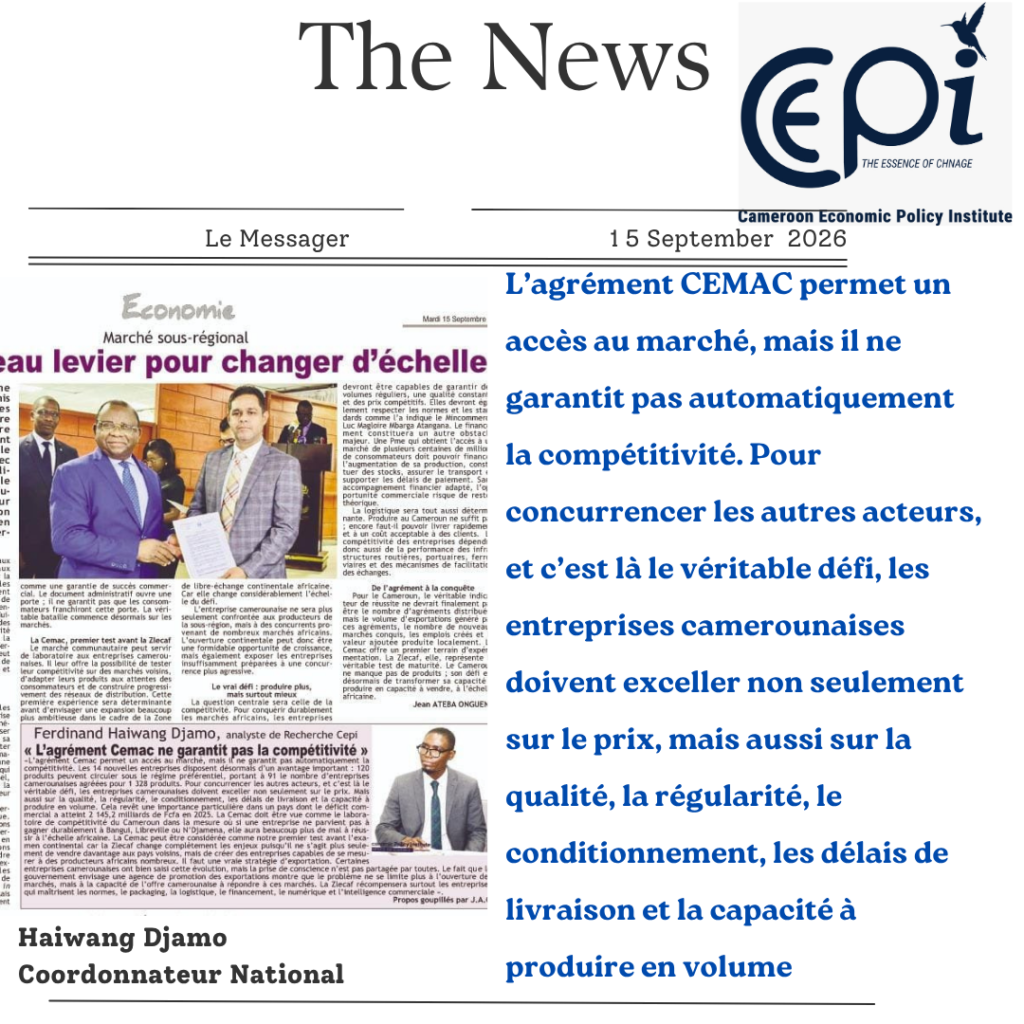
Improving the business environment should go beyond short-term digitization initiatives that stop working after 2 years. Cameroon is a case in point; we must kindly implement faster, persistent digitization of tax, social, and public services to reduce waste and improve efficiency.
Private-Sector-Led Growth Should be the Priority
A wave of resource nationalism is blowing across Africa, but restrictions do not amount to incentives for economic transformation, especially in the energy-hungry mineral processing sector. Ultimately, Ghana, Zambia, and Zimbabwe will need to address energy production and popularize incentives, not engage in a race to the bottom for $1.5 billion. The healthcare sector will require stronger domestic support to preserve critical public health functions and to ensure continuity in the delivery of services that were previously funded by USAID. There should be greater caution about privatization, and any such privatizations should consider the capacity of citizens to pay. Universal health care is a noble vision, but governments must ensure that the most urgent illnesses are treated while everyone pays their fair share.
Climate adaptation and mitigation finance need to be scaled up urgently. The Resilience and Sustainability Trust should be leveraged by countries that can, and the IMF should support greater flexibility in the criteria to ensure that countries that need such finance to protect agriculture and reduce disaster access to these funds. It may be a good idea to decentralize such finance to ensure that more local government scan access them.
A Never-Ending Debt Story
African governments cannot tax their way to sustainable debt levels. We must recognize that higher interest payments are the result of years of opaque loan terms and conditions – ill-conceived interest holidays and concessional ending that could rad 15% for some loans from our dear friends in China. Apparently, not recognizing Taiwan has only a few benefits attached to it.
On a more pragmatic note, 2025 was a good year for countries facing multiple imbalances, such as Burundi, Malawi, Sierra Leone, and Zimbabwe, as terms of trade improved, but deeper structural reforms are needed. Governance and human capital development should be at the forefront. More than one-third of the region is at high risk of debt distress, and 21 countries have higher fiscal deficits than what is required to stabilize debt. Debt vulnerabilities reflect a mix of the legacy of previous shocks and policy slippages, as well as structural challenges from large development needs amidst limited revenues. The debt burden is elevated, which is crowding out development expenditures. Furthermore, higher effective interest rates and the unfortunate drop in official development assistance mean that a greater share of revenues is dedicated to interest payments.
Non-Concessional lending should be an Explicit Priority, and we should remind our anti-aid friends that a significant portion of aid is low-interest loans that are vital for trade and social infrastructure.
Central Banks Must Navigate Inflation and Growth a la Riksbank
For most central banks, there will be a difficult balancing act between controlling inflation and supporting growth. The third Gulf War could anchor inflation expectations, and central banks will need to adjust policy rates if inflation edges up. Central bank independence and clear communications are necessary to maintain price stability amid strong exchange rate pass-through. Ultimately, central banks will determine when and how to act based on how entrenched inflation becomes. Adopting a restrictive policy stance will not save FX reserves for much longer; it may be just enough to pause
There is a risk of second-round effects, especially where the transmission from monetary policy is weak and premature. This is the case in Burundi, Malawi, and South Sudan, where inflation is entrenched, and monetary policy frameworks are currently less robust, and coordination with fiscal policy is weak. The latter is equally the case in other African countries, so there should be more efforts to synchronize fiscal and monetary policies to achieve development outcomes while reinforcing monetary policy frameworks.
Conclusion
We have heard it before, but we should remind ourselves of it again. Africa needs well-designed, well-sequenced, and broad-based structural reforms that can deliver sizeable economic dividends. If we raise growth, reforms will improve service delivery and automatically lift living standards. Although reform design is complex and political economy constraints are ever-present, we must tailor reforms to each country’s circumstances. However, policymakers must figure out the right configuration of reforms and not merely replicate policies from the West. No country alone developed using tax incentives, human capital development, and strong public finance management and accountability provides a recipe for success.
Authors
Henri Kouam
Executive Director