A Debt-for-Climate Swap Could Support Economic Development in Cameroon
November 13, 2026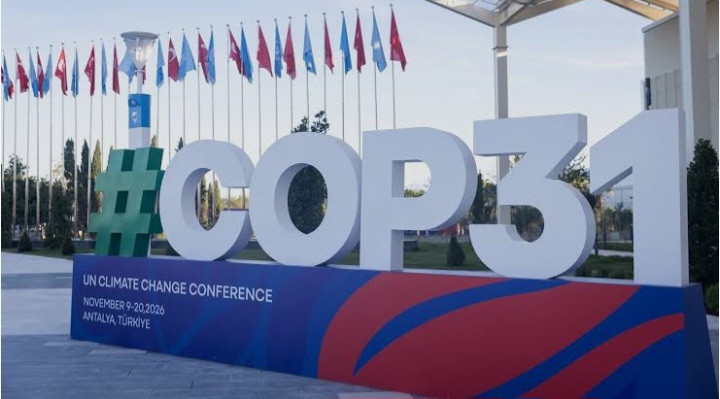
Introduction
In Antalya, where COP31 is currently being held, the African climate issue should no longer be presented as a simple request for additional funding. It must be framed differently: Why should countries that have contributed little to global warming have to borrow money to repair damage they did not primarily cause? This question reveals not so much a lack of funding as a lack of justice and financial organization.
In fact, Africa accounts for about 4% of global greenhouse gas emissions. Yet the annual losses it suffers range from 2% to 5% of its GDP due to climate-related shocks. The continent receives about 2% of global climate finance—approximately $30 billion per year—while its needs to implement its climate plans amount to $277 billion.
The issue of the quality of financing.
The United Nations Environment Program’s 2026 report estimates that developing countries’ annual adaptation needs will reach $305 billion by 2035. However, international public funding for adaptation totaled only $28.2 to $31.7 billion in 2024. In Africa, adaptation funding flows for 2021–2022 accounted for less than a quarter of the $53 billion in annual needs estimated by the OECD. In 2024, according to the OECD, 67% of public climate finance provided by developed countries to developing countries took the form of loans. We cannot call a mechanism “resilience” if it protects infrastructure today while undermining public finances tomorrow.
Projects such as levees, early-warning systems, mangrove restoration, or the protection of smallholder farmers yield collective benefits that are difficult to quantify. Financing them through commercial debt shifts the cost of a global public good onto taxpayers. The rule should be clear: grants for essential adaptation and losses and damages; patient capital and guarantees for productive projects; debt only if revenues and repayment capacity justify it.
We must make Article 9.1 of the Paris Agreement operational, rather than viewing it as a promise that is renewed at every summit.
A loan repaid with interest is not the same as a grant; an announced private investment is not a public transfer. At COP31, African countries should call for a dashboard showing the amounts disbursed, the financial terms, the beneficiaries, and the share allocated to adaptation and loss and damage.
The Baku-to-Belém Roadmap aims for at least $1,300 billion per year by 2035. According to the implementation report published on November 8, 2026, a combination of concessional financing, private investment, South-South cooperation, special drawing rights, innovative mechanisms, and carbon markets could reach 1,270 to 1,410 billion. But the current trajectory would only reach 458 to 461 billion. The gap therefore depends on political decisions, risk-sharing, and the mobilization of public budgets from wealthy countries—not on a lack of financial engineering.
The International Monetary Fund’s special drawing rights offer a potential solution, provided their unequal distribution is corrected. Countries with substantial reserves could redirect a portion of their allocations to African multilateral banks, which are capable of transforming them into long-term, low-cost financing. Multilateral banks should also make greater use of their guarantees and risk-sharing mechanisms to attract investors without passing on potential losses to African governments.
Reducing the artificial cost of capital in Africa.
The OECD points out that the average cost of capital for energy infrastructure in Africa is approximately 15.6 percent, compared with nearly 5 percent in Western Europe and the United States. Partial guarantees, political risk insurance, exchange rate mechanisms, and regional project preparation platforms can reduce this premium. But these instruments must be financed by concessional resources: it would be absurd for African governments to pay dearly to insure investors against risks beyond their control.
Africa’s environmental value must be better recognized.
The forests of the Congo Basin, mangroves, peatlands, and coastal ecosystems provide global climate services that are still undercompensated. Carbon markets can contribute, but they do not replace the obligations of industrialized countries. Without a reliable land registry, independent measurements, community consent, transparent contracts, and equitable revenue sharing, these markets risk privatizing the benefits and socializing the costs. Africa must advocate for rules that guarantee the rights of states and communities, the integrity of emissions reductions, and funding for local economies.
Strengthen Africa’s financing and oversight capacity.
Countries must pool their efforts in project preparation, harmonize climate data, strengthen national development banks, and publish transparent climate budgets. A continental facility could help finance technical studies, environmental assessments, and monitoring systems, which are often too costly for local governments and small businesses. Funds must reach cities, cooperatives, SMEs, and community organizations directly, with proportionate audits. Simplifying access does not mean weakening oversight: it means preventing procedures from siphoning off money intended for the people.
This strategy, however, requires discipline on the part of Africa. Governments cannot demand transparency from external parties while allowing energy contracts or the use of climate funds to remain opaque at home. They must incorporate climate risks into budgets, publish commitments and disbursements, evaluate results, and exclude projects that displace populations or destroy ecosystems.
In Antalya, African leaders should reject the false choice between climate ambition and debt sustainability. Reuters reported on November 13 that only $137 billion had been mobilized in 2024 and that the current trajectory risked leaving a shortfall of 840 billion compared to the 1,300 billion target. Vulnerable countries are criticizing the slow pace of disbursements, while geopolitical tensions and security priorities are diverting attention from climate commitments. The urgent need is to transform promises into accessible, predictable, and debt-free resources for climate public goods.
In short, COP31 will not be judged by the number of promises made, but by a verifiable question: How much new, disbursed, and debt-free financing will have reached African populations? Africa demands that the cost of the crisis be borne according to responsibility, capacity, and benefit. Africa must finance adaptation through grants, compensate for its ecosystem services, mobilize private capital where revenues exist, and reform the institutions that make investments more expensive.
Authors
Mbarga Guy Wangso
Research Analyst
&
Haiwang Djamo
National Coordinator/Research Analyst