CEPI Engages 450 Students of Sure Vision College on Responsible AI and Social Media Use
November 20, 2026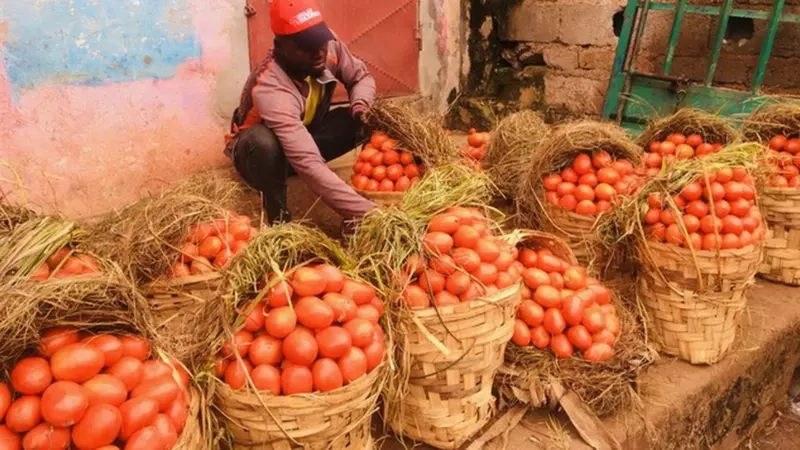
Introduction
Tomatoes are a vital cash crop for Cameroonian farmers and are used by the majority of Cameroonians on a daily basis. In spite of its importance, the tomato value chain is developing in a sporadic manner, with food loss estimated at up to 40% by the World Food Program. In order to prioritize growth of the sector, policymakers must prioritize evidence-based strategies that promote production, transformation, and distribution across Cameroon, cognizant of the infrastructural challenges.
This brief provides an overview of Cameroon’s tomato sector in Section I, followed by an analysis of policies designed to promote the growth of the sector in Section II before illustrating the impacts of said policies on production and local prices. This is followed by actionable policy recommendations and a conclusion.
Section 1: Overview of Cameroon’s Tomato Sector
Cameroon produces up to 900,000 tonnes of tomatoes every year, but lacks the capacity to process and industrialize the tomato value chain. The resulting mismatch between tomato production and processing capacity leads to food spoilage, crops rotting in fields, and severe price slumps for producers and farmers. Private sector investments such as FCFA 4 billion push from Delifood Agro-industries, as well as government-supported projects, are only slowly converting fresh tomatoes into pastes and other products for Cameroonian consumers.
The issue of spoilage and the poor organization of the value chain was evident during the COVID-19 crisis. After the border closures and lockdown measures on March 17, 2020, Cameroonian farmers were forced to sell a crate of tomatoes for FCFA 1500 – 2500, instead of FCFA 7000 – 11,000 during the rainy season. The 25 – 35% price drop completely absorbed the total sales margin of small and large producers alike.
The tomato value chain faces some headwinds that prevent its development and impact the ability to transform it into other durable household products like paste or purees. Firstly, the high spoilage rates estimated at up to 40% are driven by the lack of cold storage and logistics solutions that cause harvests to rot and impose huge losses on farmers. The lack of adequate infrastructure leaves the sector vulnerable to external events like pandemics, pest infestations, among others. This was manifest during the COVID-19 pandemic when prices fell from FCFA 7000 to FCFA 1500 on average. The lack of processing companies and plants means that farmer in producing basins like the West are unable to sell their products easily.
Who are the Main Brands in the Market?
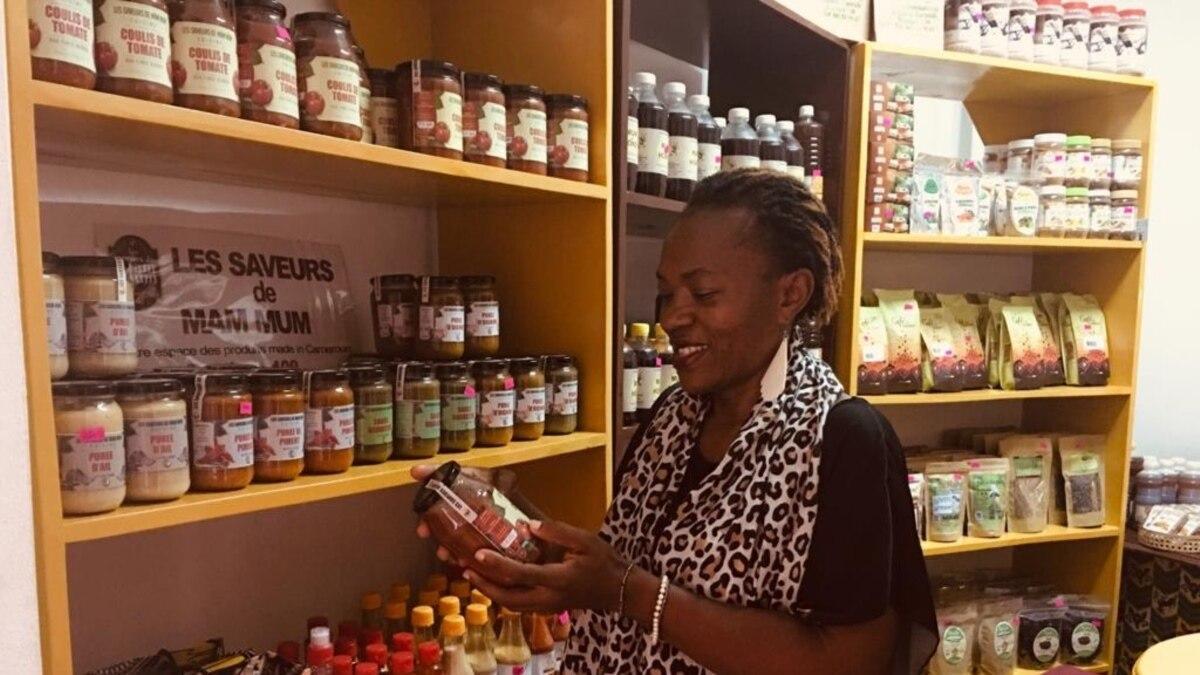
The lack of industrialization is compounded by the presence of a few actors that include Mamy, Gino & Pomo, and Nanky, the latter being a 100% Cameroonian natural tomato puree brand designed for quick cooking. However, there are several artisanal brands that are little-known and not stocked on supermarket shelves, making access to a variety of alternatives challenging for Cameroonians – 40% of whom live below the poverty line. The few local actors are compounded by Mutti – a premium Italian brand and Contadina & Cento, which are bought by premium buyers.
Section II: Strategies to Promote the Development of the Tomato Sector
There are no specific policies that target the tomato sector in Cameroon, but a broad set of policies to boost agro-production and transformation exist. In the 2023, 2024 and 2025 state budgets, policymakers suspended the imports duties for agricultural inputs and equipment, while employees less than 35 are not subject to income taxes. For cold storage solutions that rely on solar energy, there is a suspension of import duties to support adoption across all agro-focused value chains. Tomato processing plants that launch in Cameroon are exempt from business license tax for two years if they register with an approved management center (Centre des Gestions Agreer).
During the COVID-19 pandemic, policymakers developed a series of measures to support tomato cooperatives that were badly impacted by the COVID-19 pandemic. This ranged from improving the technical capacity of actors to accelerate processing, while enabling farmers to access agricultural inputs.
Section III: Impact of Policy Initiatives to promote the Growth and Development of the Sector
There are no specific policies designed to boost industrialization of the tomato sector, as incentives have tended to target the broader agriculture industry and agro-processing sectors. Cameroon’s tomato production rose from 1.10 million metric tons in 2020 to 1.28 million metric tons due to a range of supportive policies outlined above. However, there are few national processing brands that manufacture tomato paste, among others. However, reform efforts have been constrained by high fertilizer and input costs, climate shocks, severe market shortages or surpluses that are compounded by supply chain issues.
While there are no visible results, this is not due to a lack of supportive market-friendly policies, but a slow rate of take-up from local and international investors. However, tomato production has increased in spite of geopolitical and external factors that have caused fertilizer prices to rise between 2020 – 2025. The suspension of import duties has led to the growth of many artisanal brands and a few large established national brands of tomato derivatives. Greater efforts are required to scale processing and accelerate industrialization to leverage the positive spillovers of continental initiatives such as the African Continental Free Trade Area (AfCFTA).
Policy initiatives should be popularized and the implementation of the AfCFTA should be accelerated to create export opportunities for small producers and manufacturers. Cameroon can become a lever for supply in neighboring countries such as Tchad, central African Republic and Gabon to name a few.
Policy Recommendations
Policymakers should popularize investment initiatives to ensure that more private sector investments are channeled into processing plants. The current 10-year tax break, suspension of import duties for agricultural equipment, and zero income tax for hires below the age of 35 should be popularized among private investors.
Cooperatives in main production basins can be grouped and financed to support the emergence of processing plants in the West and South West region. This will allow up to 60% of tomato production to be processed closer to production basins, reducing food spoilage and waste in tomato farms. Such an approach will be inclusive for thousands of informal tomato farmers who are not registered businesses.
Greater efforts should be made to train farmers on storage and low-cost processing methods to enable them to better prepare their products for markets and store them for longer periods. Rather than pick winners, policymakers could leverage the network of entrepreneurs and farmer organizations across the country to ensure balanced and inclusive development.
Finally, greater efforts to organize current buyers and suppliers will improve the functioning of the market and support low prices, without disadvantaging producers. Furthermore, policymakers will save more by not wasting resources to enforce a particular price in the market. A market-driven system will work better by creating price signals that balance both demand and supply, without government intervention.
Conclusion
The tomato sector in Cameroon is vital for employment and supports millions of livelihoods. However, the 900,000 tonnes of tomatoes produced cannot be transformed into paste and other products due to limited cold storage logistics, low levels of investment, and a poorly organized sector. Popularizing investment incentives and leveraging current networks of producers, manufacturers and suppliers will improve price signals, accelerate economic transformation and support long-term employment as well as price stability.
Reference List
- Agyemang, R. et al. (2026). Impacts of climate change on vegetable crop production, quality, and safety in Sub-Saharan Africa: A systematic review of tomato, onion, and pepper, Climate Smart Agriculture, 3(3), https://www.sciencedirect.com/science/article/pii/S295040902600033X
- Andzongo, S. (2026). Cameroon plans a revival plan for the tomato sector affected by border closure, Business in Cameroon, https://www.businessincameroon.com/agriculture/1707-10558-cameroon-plans-a-revival-plan-for-the-tomato-sector-affected-by-border-closure
- Market Minute. (2025). Cameroon’s Capital Gripped by Unprecedented Tomato Shortage as Prices Skyrocket, Squeezing Households, Wed Bush, https://investor.wedbush.com/wedbush/article/marketminute-2025-10-21-cameroons-capital-gripped-by-unprecedented-tomato-shortage-as-prices-skyrocket-squeezing-households
- Mbodiam, R. (2026). Cameroon: Delifood to pump CFA4bn into a tomato processing plant, Business in Cameroon, https://www.businessincameroon.com/agriculture/1011-12845-cameroon-delifood-to-pump-cfa4bn-into-a-tomato-processing-plant
- Punch Newspapers. (2026). 𝗧𝗼𝗺𝗮𝘁𝗼 𝗽𝗿𝗶𝗰𝗲𝘀 𝗺𝗮𝘆 𝗱𝗿𝗼𝗽 𝗳𝗿𝗼𝗺 𝗔𝘂𝗴𝘂𝘀𝘁 𝗮𝘀 𝘄𝗲𝘁-𝘀𝗲𝗮𝘀𝗼𝗻 𝗵𝗮𝗿𝘃𝗲𝘀𝘁 𝗯𝗲𝗴𝗶𝗻𝘀 — 𝗞𝗮𝗱𝘂𝗻𝗮 𝗳𝗮𝗿𝗺𝗲𝗿𝘀, Punchng
- Sotigroup. (2026). Mamy, https://sotigroup.com/en/product/mamy/
- Tridge. (2026). Production of Fresh Tomato in Cameroon, https://www.tridge.com/tridge-woods/fresh-tomato/CM
Author
Henri Kouam
Executive Director