Cameroon’s Rice Import Substitution Strategy: Can PIISAH Deliver?
November 20, 2026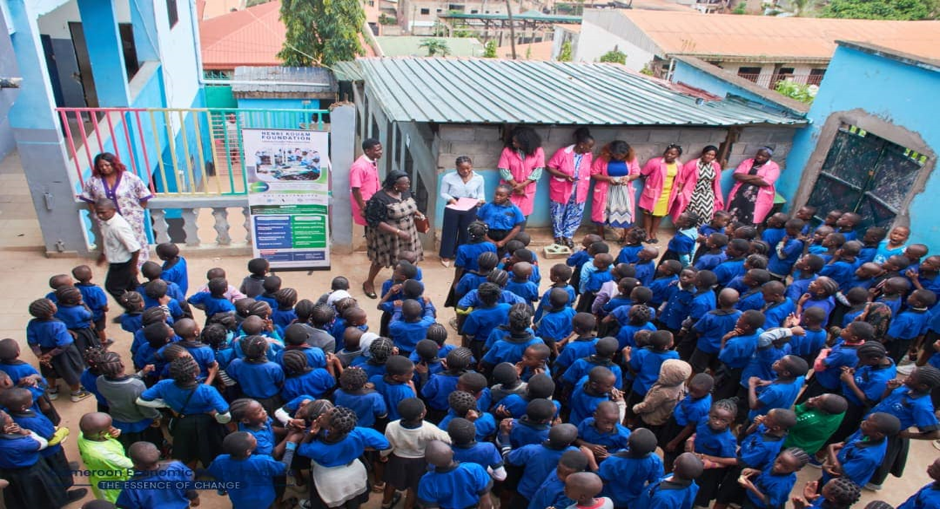
The Cameroon Economic Policy Institute (CEPI), of the Henri Kouam Foundation, launched its outreach activities targeting primary, secondary and higher education institutions with an educational visit to Sure Vision College, Nkolmesseng, Yaoundé, on Tuesday, 13 October 2026.
Held under the theme “AI and Social Media: Time for Responsible Use,” the session brought together approximately 450 learners, including 300 secondary school students and 150 primary school pupils. The outreach was facilitated by Dr. Egbe-Njie Fride, Research Fellow at CEPI; Mr. Henri Kouam, Executive Director of CEPI; and Mrs. Amungwat Martina, Pedagogic Inspector at MINEDUB.
The initiative aimed to raise awareness among young people about the growing influence of artificial intelligence and social media, while encouraging their responsible use in education and everyday life.
Introducing CEPI and the Importance of Digital Responsibility
The CEPI team was received by the school administration, led by the Principal, Mr. Jang Deric, and the Senior Discipline Master, Mr. Nformi Frankline.
The session was officially opened by Mr. Henri Kouam, who introduced CEPI and outlined its mission of promoting economic freedom and inclusive development through research, policy engagement and public awareness. He also highlighted the importance of engaging young people in discussions about emerging technologies and their implications for education and everyday life.
Understanding Artificial Intelligence and Social Media
The educational discussions were led by Dr. Egbe-Njie Fride, who introduced students to artificial intelligence and social media, explaining their everyday applications and relevance to learning.
Through interactive discussions, students shared their experiences using digital platforms and AI tools for academic activities. The session highlighted how AI can support learning by helping students understand difficult concepts, summarise study materials, explore ideas and conduct research.
However, participants were encouraged to view AI as a learning aid rather than a replacement for independent thinking, personal effort and critical judgement.
The discussions also emphasised responsible digital behaviour, including verifying information before sharing it, protecting personal data and understanding the potential consequences of online actions.
Extending Digital Awareness to Primary School Pupils
Following the secondary school session, the CEPI team proceeded to the primary section, where discussions were adapted to suit the pupils’ level of understanding.
In addition to the introduction to AI and social media, pupils participated in an interactive general knowledge session on Cameroon. Topics included the country’s national motto, the President, its ten regions and their respective capitals, and the national anthem.
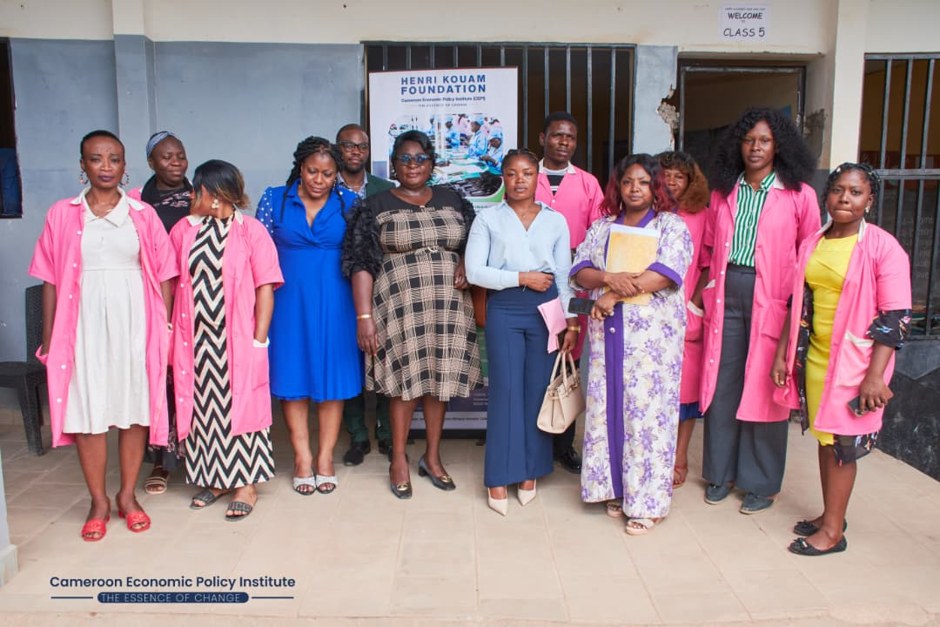
CEPI team with staff of Sure Vision College’s primary section.
Interactive Learning and Access to Educational Resources
Both sessions featured question-and-answer exchanges led by Mr. Henri Kouam, giving learners the opportunity to seek clarification, share their views and participate actively.
To further encourage the use of digital resources in education, students were introduced to a list of educational websites that could support their academic activities, including assignments, research and independent learning.
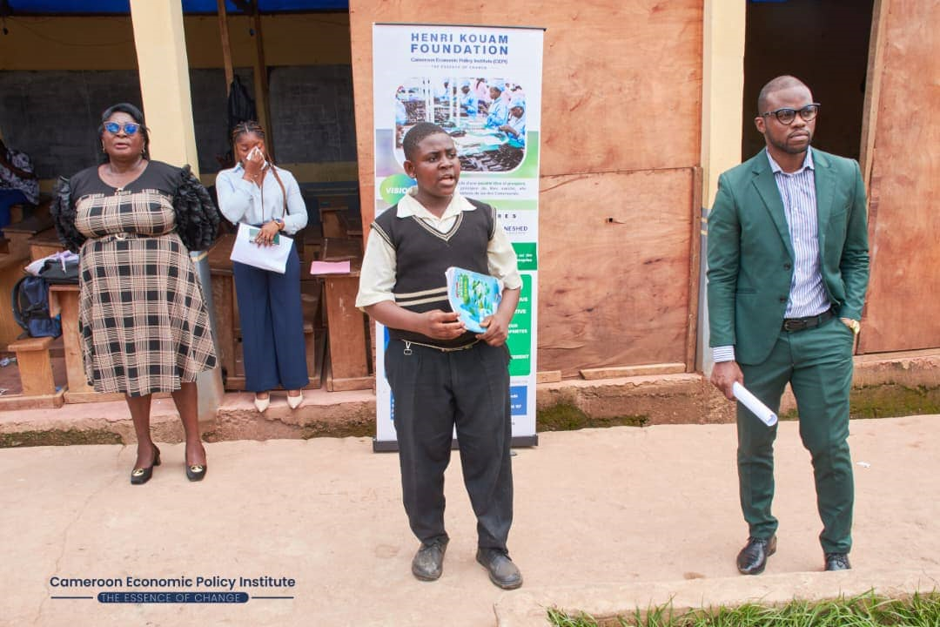
Question-and-answer session led by CEPI Executive Director, Mr. Henri Kouam.
Challenges and Recommendations
Discussions with the school administration at the end of the outreach highlighted limited access to computers as a major obstacle to the effective integration of digital technologies into teaching and learning.
The administration, represented by Senior Discipline Master Mr. Nformi Frankline, expressed the need for improved computer facilities and internet connectivity to support the school’s digital transformation and enable teachers and students to benefit more effectively from AI-powered learning tools.
The outreach highlighted the need to move beyond basic digital awareness towards developing practical digital competencies among learners. In this regard, CEPI recommends:
- Expanding access to digital learning: Schools should explore affordable access arrangements, including computer laboratories, to address inequalities in access to devices, internet connectivity and digital skills.
- Integrating age-appropriate AI and digital literacy: Digital education programmes and tools should be progressively incorporated into school activities, with content adapted to the different learning levels of pupils and students.
- Strengthening teacher capacity: Teachers and school administrators should receive continuous training to guide learners in the appropriate and responsible use of AI and digital platforms.
- Encouraging collaboration: Schools, parents and digital education stakeholders should work together to promote responsible technology use beyond the classroom.
- Improving internet affordability and ICT infrastructure: Efforts should be made to reduce internet costs by 20% and ensure that schools across the country have access to computer laboratories. ICT education should also place greater emphasis on practical, real-world problem-solving and projects that students can develop themselves.
Acknowledgements
CEPI sincerely thanks its partners, Atlas Network, ED Africa Group, Phoenix Construction and Stoneshed Asset Management, for their generous support in making this outreach possible.
Special appreciation goes to the Principal, Mr. Jang Deric, for welcoming the CEPI team, the teaching and administrative staff for their cooperation, and the students and pupils of Sure Vision College for their attention, participation and enthusiasm.
About CEPI
The Cameroon Economic Policy Institute (CEPI) is a non-partisan think tank of the Henri Kouam Foundation that promotes economic development through fact-based research, policy advocacy and events that encourage entrepreneurship and free-market ideas.
Prepared by: CEPI Team