Beyond Traditional Finance: Fintech Solutions for SMEs Funding
April 25, 2026
Iran–United States–Israel Conflict: Africans must Brace for Inflation or Begin Refining More Oil
April 25, 2026
Key Highlights
- Core friction points blocking economic freedom: opaque property rights, centralized capital, inefficient logistics. We propose smart, quantifiable deregulation and the liberalization of the communications sector.
- 30% Reduction in fuel and labor costs achieved by AI-powered logistics optimization (KamerExpress, West Region)
- Reduction in time spent on government compliance when AI automates customs documentation and VAT filings by up to 50%.
- Cameroon’s National Development Strategy requires a truly open market to meet its digital and industrial goals.
Introduction
Cameroon’s economic landscape is characterized by high administrative friction, restrictive licensing, and state dominance in key sectors — acting as a structural drag on entrepreneurial activity and individual wealth creation. This brief outlines how Artificial Intelligence (AI) serves as a potent, market-driven tool to radically expand economic freedom by removing bureaucratic bottlenecks and democratizing access to capital and markets. Our framework proposes quantifiable deregulation, the establishment of competitive digital infrastructure, and the protection of intellectual property to fully unleash AI’s potential. By prioritizing private sector innovation and decentralized decision-making, we aim to provide potential donors with a clear roadmap for catalyzing a transparent, high-growth economy — improving the ease of doing business, particularly in nascent FinTech and logistics sectors.
Core Thesis AI represents more than a technological breakthrough — it is a liberation tool for Cameroon’s economy. The path to genuine, sustained economic growth is not through new government programs, but through dismantling regulatory barriers and allowing AI-enabled private solutions to flourish.
The Economic Constraints and the AI Disruption
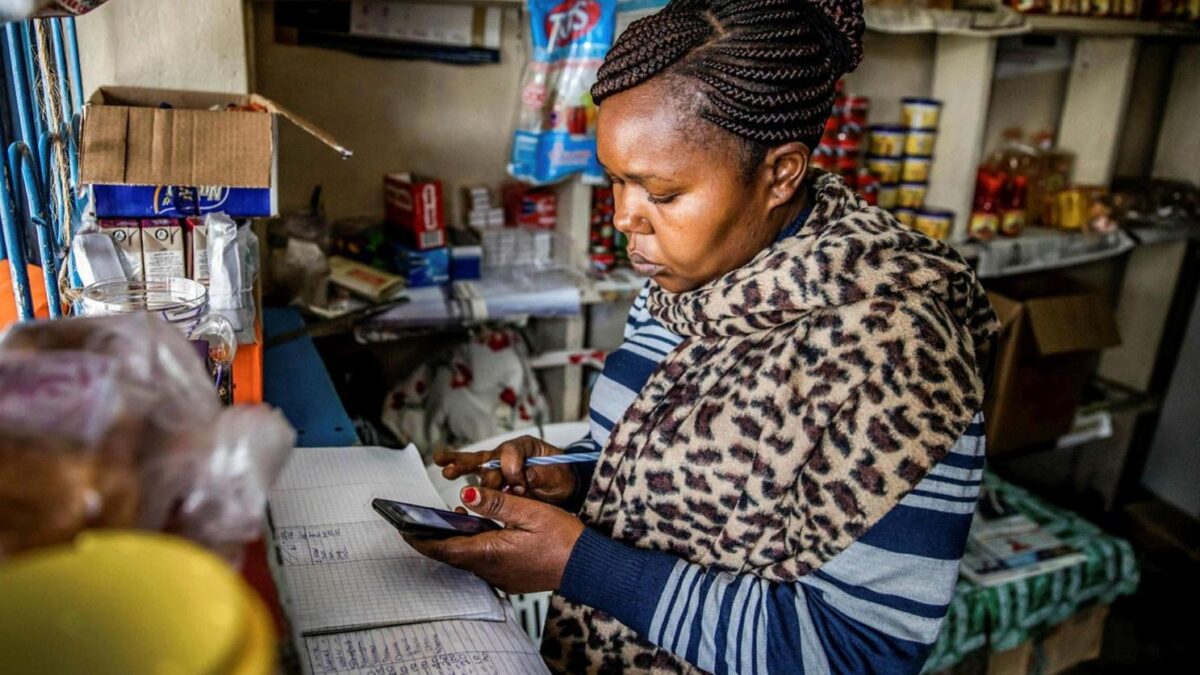
The traditional Cameroonian economy is constrained by three primary friction points that slow economic freedom: opaque property rights, centralized capital access, and inefficient state-run logistics chains. Registering a new business, securing land titles, or obtaining commercial permits remains a protracted, often corrupt process — contributing to a high shadow economy and discouraging formal investment (Heritage Foundation, 2024). However, a nascent, AI-driven parallel economy is emerging as a disruptive force. The proliferation of affordable smartphones — even in regions like the East and Far North — has created a fertile ground for decentralized solutions. Digital FinTech platforms, leveraging machine learning for credit scoring, are bypassing traditional banking systems that historically favour large, established enterprises in Douala and Yaoundé.
AI as a Democratizing Force Digital FinTech platforms are granting individuals previously deemed ‘unbankable’ access to micro-loans and working capital — a direct expansion of economic liberty. AI, through decentralized processing and optimization, directly challenges state monopolies over critical infrastructure, reducing transaction costs and increasing market reach for small producers.
State control over critical infrastructure — especially in data and telecoms — creates artificial monopolies that raise operational costs for all businesses. Local e-commerce platforms are learning to use AI to optimize internal logistics, minimizing reliance on unreliable national postal services. The resulting efficiency gains translate into lower transaction costs, greater market reach for small producers, and fundamentally, a greater degree of producer and consumer freedom.
Deregulatory Policies for AI-Driven Economic Expansion
The current regulatory posture — characterized by caution and centralized control — is the single greatest impediment to realizing AI’s economic benefits. To transition to a truly free and innovative market, the government must intelligently deregulate to incentivize capital and technology inflow.
1. Establish a Sovereign Data & IP Sanctuary
Create a specialized economic zone, potentially centred in the Littoral Region, designated as a “Digital Economic Freedom Zone.” Within this zone, international AI and data science firms would receive guarantees of full intellectual property (IP) protection and exemption from restrictive national data residency requirements for five years. This direct signal of respect for IP and capital rights will attract high-value foreign direct investment (FDI) necessary to build cutting-edge data centres and cloud services (Cato Institute, 2024).
2. The Regulatory Overpass for FinTech
Expand the proposed “Digital EdTech Regulatory Sandbox” into a broader “Market Innovation Sandbox.” This zone would grant FinTech, logistics, and data analytics firms a five-year exemption from legacy commercial, banking, and sector-specific regulations — provided they adhere to core anti-fraud and consumer protection rules. This allows AI solutions to rapidly prove their disruptive efficiency without being choked by outdated bureaucracy.
3. Mandate Infrastructure Liberalization
Condition all future state investments or licenses in the telecom sector on a mandatory commitment to “Open Access” principles, ensuring that new fibre and data infrastructure is priced transparently and made equally available to all competing AI service providers — preventing the emergence of private digital monopolies (World Bank, 2023).
Business Examples of AI Fostering Economic Freedom
Market actors are already utilizing AI to reduce friction and bypass institutional constraints, illustrating a bottom-up expansion of economic freedom.
Decentralized Micro-Lending (FinTech) — LendAI, Yaoundé. A pilot program uses deep learning algorithms to analyse mobile payment history, utility bill payments, and social network data to establish creditworthiness for informal sector workers — completely bypassing collateral and documentation requirements of traditional banks. This is economic freedom in action: access to capital based on verifiable digital activity, not bureaucratic approval. (IFC, 2024).
E-Commerce Logistics Optimization — KamerExpress, West Region KamerExpress utilizes routing algorithms to aggregate delivery requests across multiple third-party vendors, reducing fuel consumption and labour time by over 30%. This efficiency gain has allowed dozens of small, rural craft producers to access urban markets in Douala and Yaoundé — enabling them to compete on quality and price against established importers. (African Economic Outlook, 2024).
AI-Powered Regulatory Compliance — Cross-Border Trade Large enterprises engaged in cross-border trade are deploying AI to automate customs documentation, tariff classification, and VAT filings. This reduces time spent on government compliance by up to 50%, minimizing opportunities for discretionary intervention and rent-seeking behavior by officials — an essential step towards institutional transparency.
Potential AI Use Cases for a Free Market
The following use cases, supported by deregulation, illustrate the potential for AI to dismantle economic friction and expand market access:
Blockchain-AI for Property Rights Security
Ghana’s Land Commission has explored AI tools to digitize and verify millions of land records, significantly reducing fraud and accelerating title transfers — unlocking billions in latent capital (Brookings Institution, 2023). Cameroon can commit to utilizing AI to verify and convert historical land registry data into immutable smart contracts on a blockchain. This eliminates the uncertainty and corruption associated with manual title deeds, securing private property rights for all citizens in minutes, not years.
Autonomous Regulatory Oversight (RegTech)
Deploying AI systems to monitor financial transactions for illicit activity in real-time allows regulatory bodies to focus on systemic risks, while simultaneously permitting free-market FinTech innovation to proceed without heavy, prescriptive rules — adhering to the principle of “regulate outcomes, not innovation.”
Cross-Border Trade Optimization
AI analyses international trade agreements, customs requirements, and optimal transport routes to automatically generate the least-cost, most-efficient cross-border supply chain for SMEs in the Southwest and Northwest regions — enhancing Cameroon’s global competitiveness and accelerating AfCFTA implementation while helping fragile areas mitigate security risks.
AI-Driven Public Service Transparency
Employing AI to monitor and audit public procurement processes, flagging suspicious patterns, bids, and contract awards. This significantly reduces opportunities for rent-seeking and enhances public sector efficiency — reducing the taxpayer burden on productive private enterprise (Transparency International, 2024).
Key Challenges to Economic Liberty
Despite the technological promise, three institutional challenges threaten to halt the expansion of AI-driven economic freedom:
Centralized Infrastructure Control The state’s continued near-monopoly over data fibre backbones and energy distribution severely limits the deployment speed and cost-effectiveness of AI systems, particularly in the most underserved regions — artificially protecting incumbent interests.
Regulatory Capture Vested interests, threatened by AI’s efficiency and transparency, actively lobby for new, restrictive regulations designed to protect their traditional, friction-heavy business models. This is one of the most significant structural barriers to digital transformation.
Lack of Rule of Law in the Digital Space Insufficient judicial and police capacity to enforce digital contracts, intellectual property rights, and cybersecurity creates a high-risk environment that chills private investment — requiring immediate institutional strengthening to secure digital assets and contracts.
Priority Recommendations for Donors
To ensure the market-driven adoption of AI translates into sustainable economic freedom, CEPI recommends donor funds be channelled through private sector and civil society initiatives focused on institutional reform:
| RECOMMENDATION 1: Fund a Digital Rights Legal Defense Fund (DRLDF). Allocate capital to a non-profit foundation dedicated to providing pro bono legal services to entrepreneurs whose AI innovations or digital platforms are challenged by arbitrary regulatory action, or whose intellectual property is infringed upon. This directly strengthens the rule of law in the digital sphere. |
| RECOMMENDATION 2 Seed Capital for Open Data Platforms Provide grants to local private entities to develop and maintain open-source data infrastructure (e.g., anonymized public sector datasets on health, logistics, and climate) — essential inputs for training localized AI models and bypassing the current data-hoarding tendencies of government ministries. |
| RECOMMENDATION 3: Sponsor Regulatory Audit Initiatives. Finance independent, private-sector teams to conduct a comprehensive regulatory audit across all economic sectors, identifying and proposing the elimination of regulations that can be functionally replaced by AI-powered automated compliance or decentralized market mechanisms. |
| RECOMMENDATION 4: Invest in Competitive Digital Infrastructure. Open the communications sector up to foreign competition, such as Starlink, to improve internet access and reduce the chokehold the state has on the communications sector — a prerequisite for any serious AI-driven economic development agenda. |
Conclusion
Artificial Intelligence represents more than a technological breakthrough — it is a liberation tool for Cameroon’s economy. By reducing administrative friction, expanding access to finance, and promoting transparent governance, AI can dismantle the structural barriers that constrain entrepreneurship and market participation. Realizing this transformative potential requires decisive deregulation, robust protection of digital property rights, and open competition in infrastructure. Partners should prioritize private-led innovation, institutional reform, and digital inclusion. With these measures, Cameroon can transition from a state-controlled, low-growth model to a dynamic, AI-driven economy rooted in individual freedom and sustainable prosperity.
| About the Cameroon Economic Policy Institute (CEPI) |
The Cameroon Economic Policy Institute (CEPI) is a think tank lodged at the Henri Kouam Foundation that improves economic development through fact-based research, policy advocacy, and events to boost entrepreneurship and localized free-market ideas. CEPI has successfully led the implementation of two verifiable policy reforms through strategic engagement with policymakers, policy papers, and media advocacy. CEPI consults for international and national institutions, governments, and multilateral organizations to support the development of policies that advance entrepreneurship and inclusive development.
Areas of Work
| Fiscal Policy & Taxation | Gender & Inclusive Growth | Trade & Investment |
| Labour Markets | Agriculture & Food Security | Digital Economy |
| About the Cameroon Economic Policy Institute (CEPI) CEPI is a think tank at the Henri Kouam Foundation improving economic development through fact-based research, policy advocacy, and events to boost entrepreneurship and free-market ideas. CEPI has successfully led two verifiable policy reforms. www.camepi.org | info@camepi.org | |
AUTHORS
Henri Kouam | Founder & Executive Director
Paul Tamfu | Program and IT Analyst