Analysis of the Import-Substitution Policy in Cameroon Since 2015
February 25, 2026
China is removing its customs duties for African countries, but is Cameroon ready?
March 15, 2026
Introduction
The conflict between Iran, Israel, and the United States poses a threat to global economic stability. It is clear that geopolitical conflicts never remain confined to a single region. While they quickly spill over into new markets, they impact global energy markets, supply chains, and food prices. And for Africa, where many countries still rely heavily on energy and food imports. The continuation of this war could trigger a significant economic shock for Africa, driven by higher inflation that reduces food security and raises food prices.
- The Risk of a Global Oil Shock
The Persian Gulf accounts for a significant portion of global oil production, and the Strait of Hormuz is a major shipping lane for oil trade, with a large share of the world’s oil transiting through it daily.
Approximately 17 to 18 million barrels of oil pass through every day. If the conflict between Iran, Israel, and the United States persists, it could disrupt shipping and lead to a rapid increase in global oil and commodity prices. Henri Kouam
Such a situation would have immediate effects on African economies.
Most African countries import fuel or refined petroleum products (approximately 120 million tons per year). Indeed, when the price of oil rises on the international market, the consequences are inevitable, as fuel prices also increase in African countries. This rise in fuel prices, therefore, affects the entire economy. Transportation costs increase, food prices rise, and businesses face significant production costs. Ultimately, it is households that feel the effects of this situation, with a higher cost of living and reduced purchasing power.
- Risks to Food Security
Africa remains heavily dependent on food imports. For example, approximately 40% of cereals consumed on the continent are imported, while over 80% of the fertilizers used in agriculture are imported. The war in Ukraine demonstrated how an international conflict can cause significant disruptions to global agricultural markets.
The crisis in the Middle East will lead to higher energy and maritime transport costs, and food prices could also rise – a risk for Africans who import almost 40% of what they consume.
Moreover, in many African countries, a large portion of household income is spent on food. Such an increase could therefore exacerbate poverty and heighten social tensions. In Cameroon, where the Anglophone Crisis and Boko Haram incursions are displacing more people internally and exacerbating agricultural loss, foreign policy exuberance by the U.S. and Israel will be expensive for Africans.
- African economies remain structurally vulnerable to external shocks.
African countries are highly vulnerable to external shocks. Many are already facing high levels of debt. Inflation is persistent, and economic growth is fragile. In this context, rising energy and food prices could further complicate macroeconomic management. Consequently, governments might be forced to increase subsidies to keep fuel prices at an acceptable level. In Cameroon, inflation remains high; after reaching 7% in 2023, it fell to 4.5% in 2024 and then settled at 3.1%. Our debt is very sustainable compared to other African countries, but if Iran closes the Strait and continues to bomb other countries’ infrastructure, Cameroonians will pay a heavy price. Let’s not forget that Cameroon, like so many others, does not refine the oil used in cars and airplanes.
Africans Do Not Produce Much
Currently, Nigeria’s Lagos refinery produces 650,000 barrels per day, while the former state-owned refineries in Port Harcourt and Kaduna are undergoing rehabilitation. Other countries, such as Egypt and South Africa, operate refineries, but these are insufficient to meet African demand, with a production of only 120,000 to 160,000 barrels per day.
North Africa’s largest refinery, located in Algeria, has a capacity of only 350,000 barrels per day. In total, Africa produces less than 5 million barrels per day of refined petroleum suitable for use in bicycles and motorcycles, despite a significant need. Africa currently imports approximately 120 million tons of petroleum products, valued at an estimated $90 billion, primarily from the Middle East, India, and Europe, with South Africa, Nigeria, Egypt, and Morocco as the primary importers. Given that a third of African countries are struggling with debt, rising oil prices could jeopardize an already fragile recovery and exacerbate the impact of increasing debt levels.
- The Urgent Need to Strengthen Economic Resilience through the African Continental Free Trade Area (AfCFTA)
Every global crisis underscores the need for Africa to strengthen its economic resilience. The conflict in the Middle East serves as yet another reminder. Isn’t this another opportunity to accelerate the implementation of the AfCFTA? Indeed, the continent’s dependence on imports of energy, fertilizers, and food products makes African economies particularly vulnerable to international crises. The AfCFTA could help reduce this vulnerability by boosting intra-African trade and facilitating the movement of agricultural and industrial products between African countries.
Strengthening regional value chains in strategic sectors such as agriculture, agribusiness, and energy could also enable African countries to better absorb external shocks. For example, improved regional cooperation in fertilizer production, agricultural processing, and logistics infrastructure could reduce dependence on external markets.
Recommendations
- Cameroon must invest in SONARA to refine oil into products usable by Cameroonians. If Dangote did it in Nigeria, we can do it too with a little willpower. We must support the implementation of the AfCFTA, and market liberalization could attract investors.
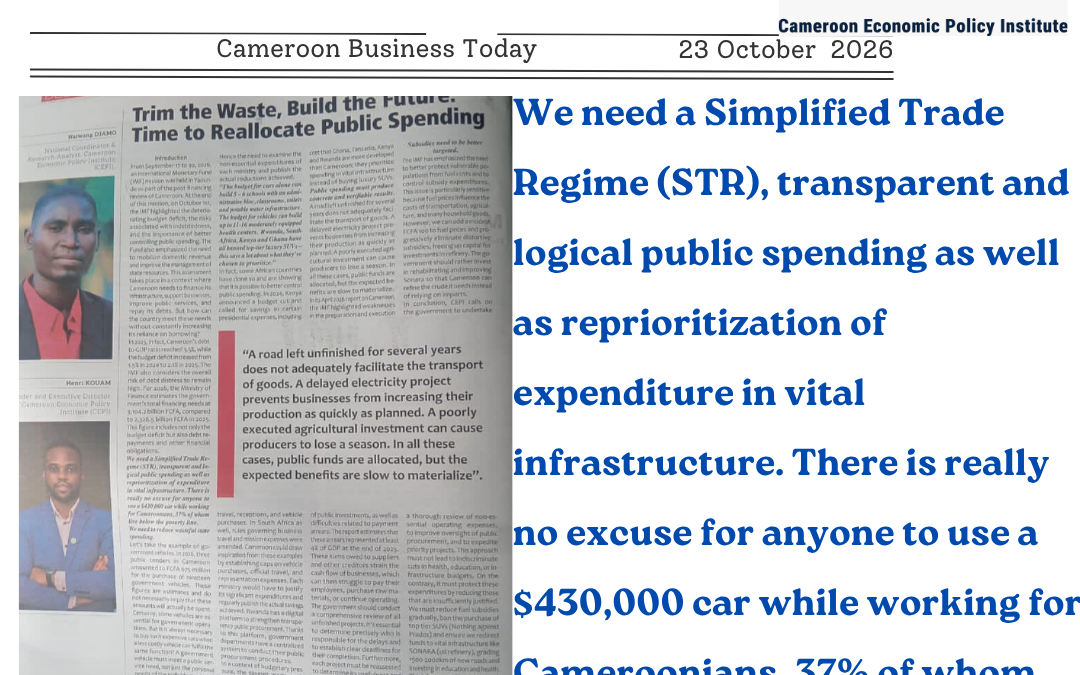
- We don’t need more tax incentives because 10 years without taxes or a zero charge on land titles is already commendable. These measures need to be promoted to attract investors and find a real solution to the problem of corruption. We don’t need more lofty incentives that haven’t worked; rather, we need to make it easy to do business without the whims of unaccountable civil administrators.
- Ensure parliament ratifies the AfCFTA protocols and instruct major agencies to implement it. We cannot rely on goodwill alone to implement the AfCFTA. Make it law and ensure it is done. It’s more likely that parliament votes to grade 1500 km of roads each year to ratify the AfCFTA protocols in 2028.
Conclusion
Geopolitical crises always have economic repercussions far beyond the regions directly affected. For Africa, the challenge lies not only in observing the conflict’s evolution but also in anticipating its economic consequences. This crisis, and all those that preceded it, should therefore serve as a lesson, because economic resilience depends above all on diversifying energy sources, strengthening local production, and deepening regional economic integration. From this perspective, the effective implementation of the AfCFTA appears as an essential lever for strengthening the continent’s economic resilience.
Authors
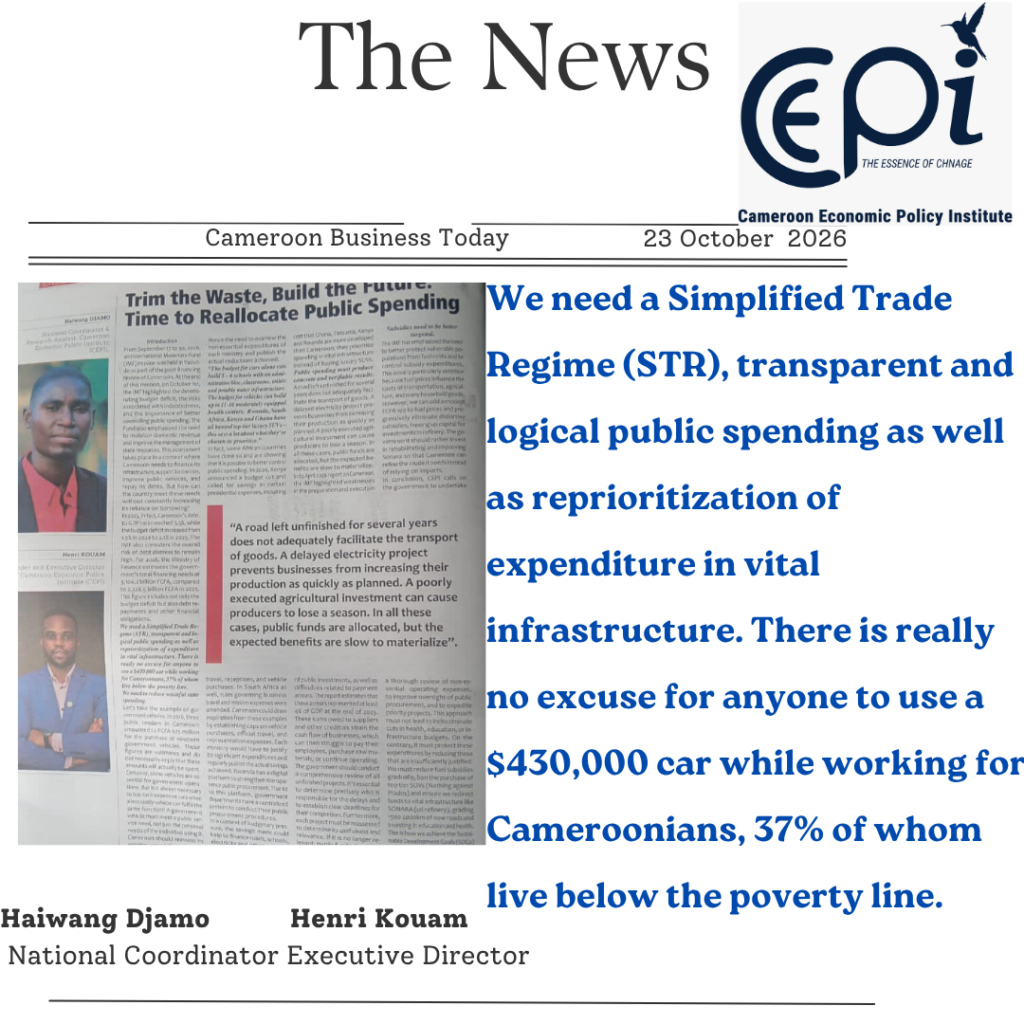
Haiwang Djamo, National Coordinator & Research Analyst
Henri Kouam, Executive Director