Gender-Responsive Fiscal Policy Will Accelerate Economic Freedom in Cameroon
October 29, 2026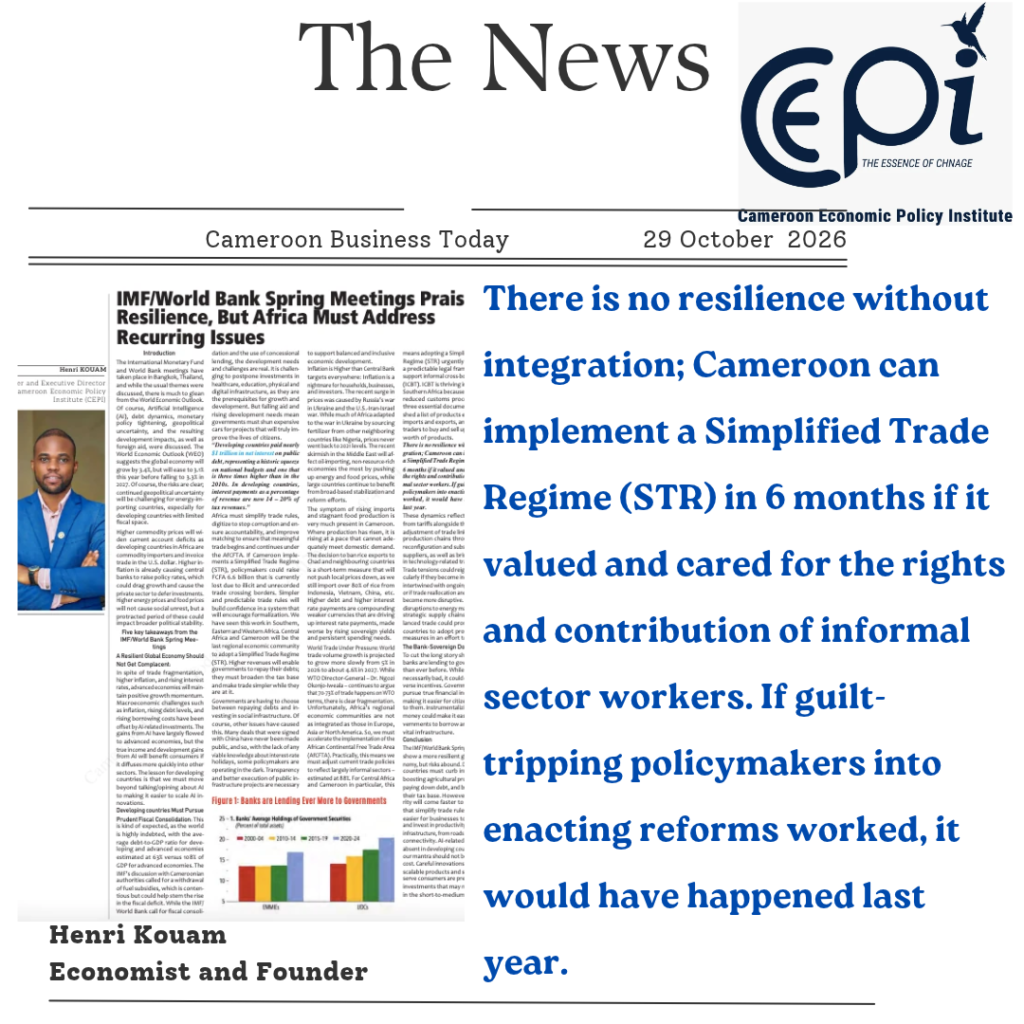
Introduction
The International Monetary Fund and World Bank meetings are taking place in Bangkok, Thailand, and while the usual themes will be discussed, there is much to glean from the World Economic Outlook. Of course, artificial intelligence (AI), debt dynamics, monetary policy tightening, geopolitical uncertainty, and the resulting development impacts, as well as foreign aid, will be discussed. The World Economic Outlook (WEO) suggests the global economy will grow by 3.4%, but will ease to 3.1% this year before falling to 3.3% in 2027. Of course, the risks are clear; continued geopolitical uncertainty will be challenging for energy-importing countries, especially for developing countries with limited fiscal space.
Higher commodity prices will widen current account deficits as developing countries in Africa are commodity importers and invoice trade in the U.S. dollar. Higher inflation is already causing central banks to raise policy rates, which could drag growth and cause the private sector to defer investments. Higher energy prices and food prices will not cause social unrest, but a protracted period of these could impact broader political stability.
Five key takeaways from the IMF/World Bank Spring Meetings
A Resilient Global Economy Should Not Get Complacent: In spite of trade fragmentation, higher inflation, and rising interest rates, advanced economies will maintain positive growth momentum. Macroeconomic challenges such as inflation, rising debt levels, and rising borrowing costs have been offset by AI-related investments. The gains from AI have largely flowed to advanced economies, but the true income and development gains from AI will benefit consumers if it diffuses more quickly into other sectors. The lesson for developing countries is that we must move beyond talking/opining about AI to making it easier to scale AI innovations.
Developing countries Must Pursue Prudent Fiscal Consolidation: This is kind of expected, as the world is highly indebted, with the average debt-to-GDP ratio for developing and advanced economies estimated at 63% versus 108% of GDP for advanced economies. The IMF’s discussion with Cameroonian authorities called for a withdrawal of fuel subsidies, which is contentious but could help stem the rise in the fiscal deficit. While the IMF/World Bank call for fiscal consolidation and the use of concessional lending, the development needs and challenges are real. It is challenging to postpone investments in healthcare, education, physical and digital infrastructure, as they are the prerequisites for growth and development. But falling aid and rising development needs mean governments must shun expensive cars for projects that will truly improve the lives of citizens.
“Developing countries paid nearly $1 trillion in net interest on public debt, representing a historic squeeze on national budgets and one that is three times higher than in the 2010s. In developing countries, interest payments as a percentage of revenue are now 14 – 20% of tax revenues.”
Africa must simplify trade rules, digitize to stop corruption and ensure accountability, and improve matching to ensure that meaningful trade begins and continues under the AfCFTA. If Cameroon implements a Simplified Trade Regime (STR), policymakers could raise FCFA 6.6 billion that is currently lost due to illicit and unrecorded trade crossing borders. Simpler and predictable trade rules will build confidence in a system that will encourage formalization – we have seen this working in Southern, Eastern and Western Africa. Central Africa and Cameroon will be the last regional economic community to adopt a Simplified Trade Regime (STR). Higher revenues will enable governments to repay their debts; they must broaden the tax base and make trade simpler while they are at it.
Governments are having to choose between repaying debts and investing in social infrastructure. Of course, other issues have caused this. Many deals that were signed with China have never been made public, and so, with the lack of any viable knowledge about interest-rate holidays, some policymakers are operating in the dark. Transparency and better execution of public infrastructure projects are necessary to support balanced and inclusive economic development.
Inflation is Higher than Central Bank targets everywhere: Inflation is a nightmare for households, businesses, and investors. The recent surge in prices was caused by Russia’s war in Ukraine and the U.S.-Iran-Israel war. While much of Africa adapted to the war in Ukraine by sourcing fertilizer from other neighboring countries like Nigeria, prices never went back to 2021 levels. The recent skirmish in the Middle East will affect oil-importing, non-resource-rich economies the most by pushing up energy and food prices, while large countries continue to benefit from broad-based stabilization and reform efforts.
The symptom of rising imports and stagnant food production is very much present in Cameroon. Where production has risen, it is rising at a pace that cannot adequately meet domestic demand. The decision to ban rice exports to Chad and neighboring countries is a short-term measure that will not push local prices down, as we still import over 80% of rice from Indonesia, Vietnam, China, etc. Higher debt and higher interest rate payments are compounding weaker currencies that are driving up interest rate payments, made worse by rising sovereign yields and persistent spending needs.
World Trade Under Pressure: World trade volume growth is projected to grow more slowly from 5% in 2026 to about 4.6% in 2027. While WTO Director-General – Dr. Ngozi Okonjo-Iweala – continues to argue that 70-73% of trade happens on WTO terms, there is clear fragmentation. Unfortunately, Africa’s regional economic communities are not as integrated as those in Europe, Asia or North America. So, we must accelerate the implementation of the African Continental Free Trade Area (AfCFTA). Practically, this means we must adjust current trade policies to reflect largely informal sectors – estimated at 88%. For Central Africa and Cameroon in particular, this means adopting a Simplified Trade Regime (STR) urgently to create a predictable legal framework to support informal cross-border trade (ICBT). ICBT is thriving in East and Southern Africa because they have reduced customs procedures to three essential documents, published a list of products eligible for imports and exports, and allow traders to buy and sell up to $2000 worth of products.
There is no resilience without integration; Cameroon can implement a Simplified Trade Regime (STR) in 6 months if it valued and cared for the rights and contribution of informal sector workers. If guilt-tripping policymakers into enacting reforms worked, it would have happened last year.
These dynamics reflect the drag from tariffs alongside the gradual adjustment of trade linkages and production chains through trade reconfiguration and substitution of suppliers, as well as brisk growth in technology-related trade flows. Trade tensions could reignite, particularly if they become increasingly intertwined with ongoing conflicts or if trade reallocation and rerouting become more disruptive. Prolonged disruptions to energy markets and strategic supply chains or unbalanced trade could prompt more countries to adopt protectionist measures in an effort to
Figure 1: Banks are Lending Ever More to Government
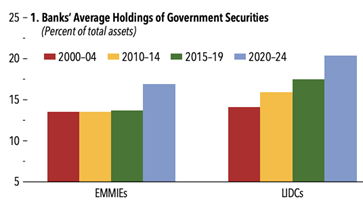
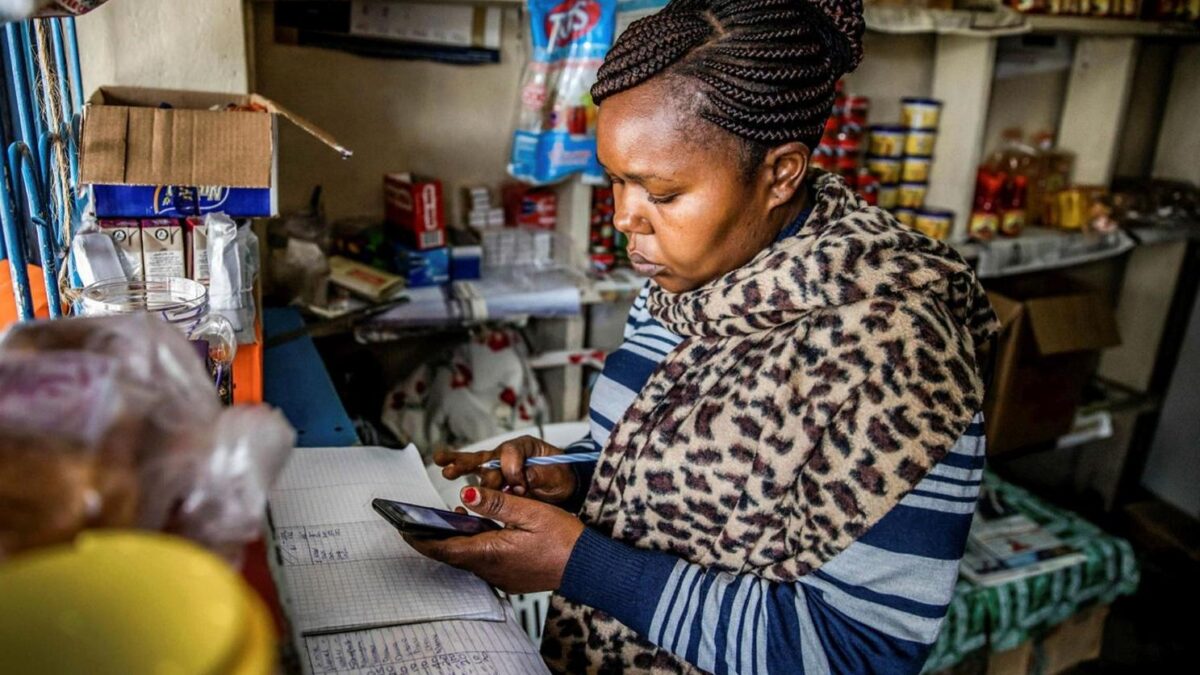
The Bank-Sovereign Doom Loop: To cut a long story short, more banks are lending to governments than ever before. While this is not necessarily bad, it could cause perverse incentives. Governments must pursue true financial inclusion by making it easier for citizens to lend to them. Instrumentalizing mobile money could make it easier for governments to borrow and finance vital infrastructure.
Conclusion
The IMF/World Bank Spring Meetings show a more resilient global economy, but risks abound. Developing countries must curb inflation by boosting agricultural productivity, paying down debt, and broadening their tax base. However, prosperity will come faster to countries that simplify trade rules, make it easier for businesses to operate, and invest in productivity-boosting infrastructure, from roads to internet connectivity. AI-related growth is absent in developing countries, but our mantra should not be AI at any cost. Careful innovations that allow scalable products and services to serve consumers are preferable to investments that may not deliver in the short-to-medium term.
Author
Henri Kouam
Economist and Founder